

 Image 1 of 4
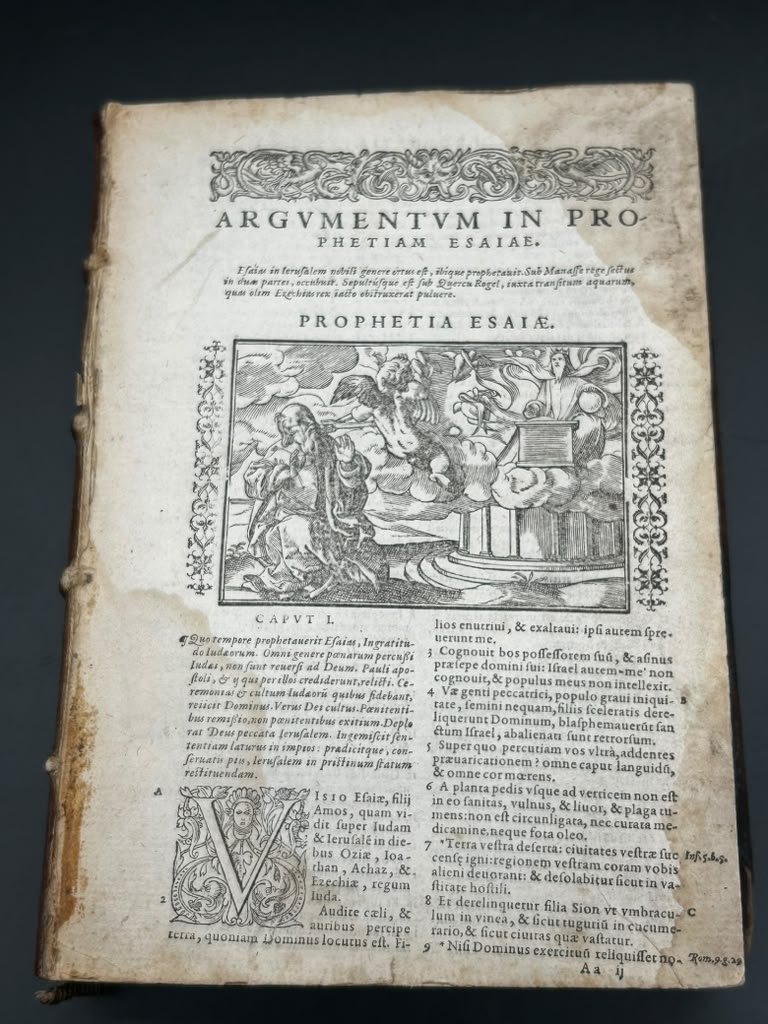 Image 2 of 4
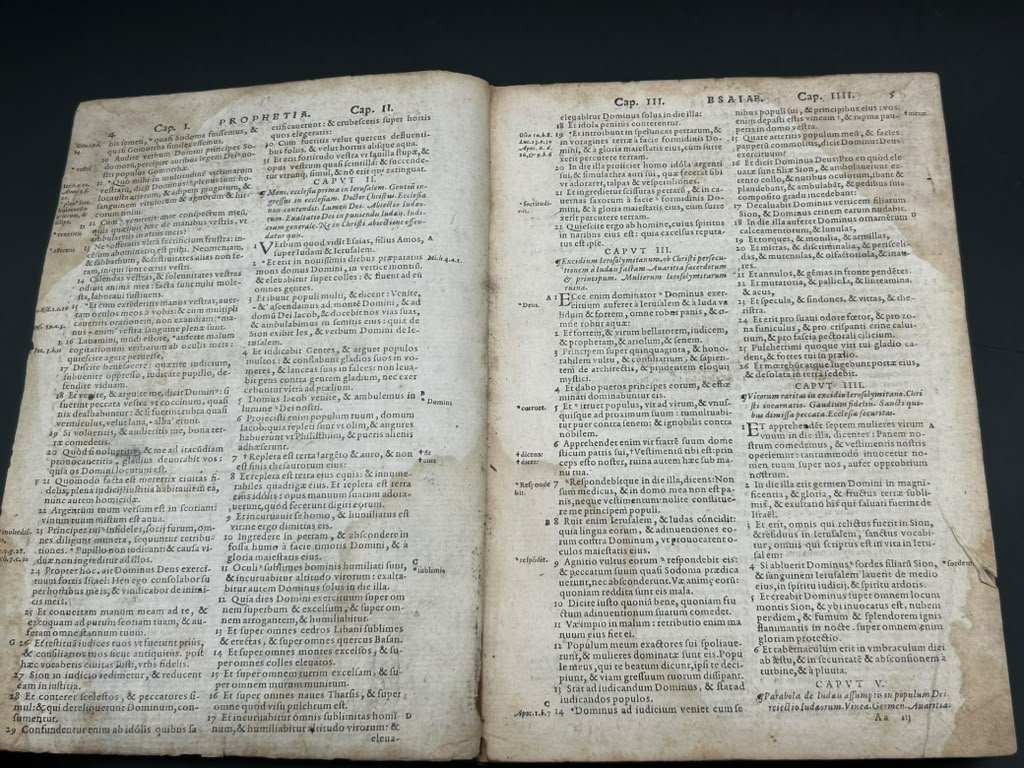 Image 3 of 4
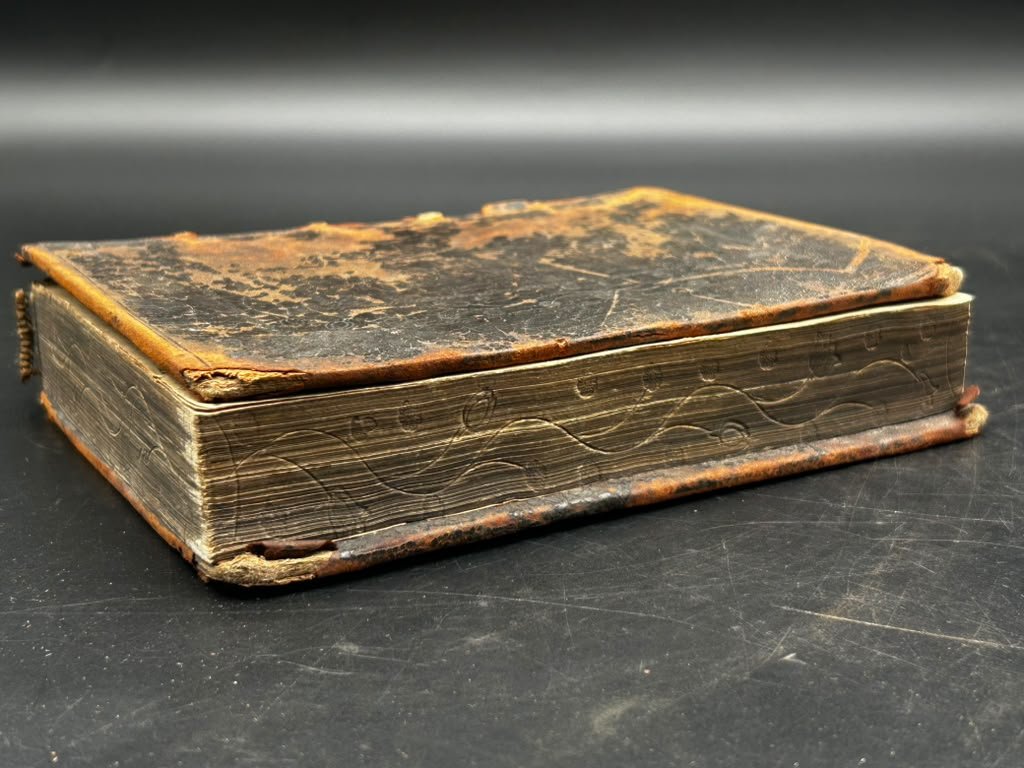 Image 4 of 4
FREE UK Mainland Delivery on all Shop Stock
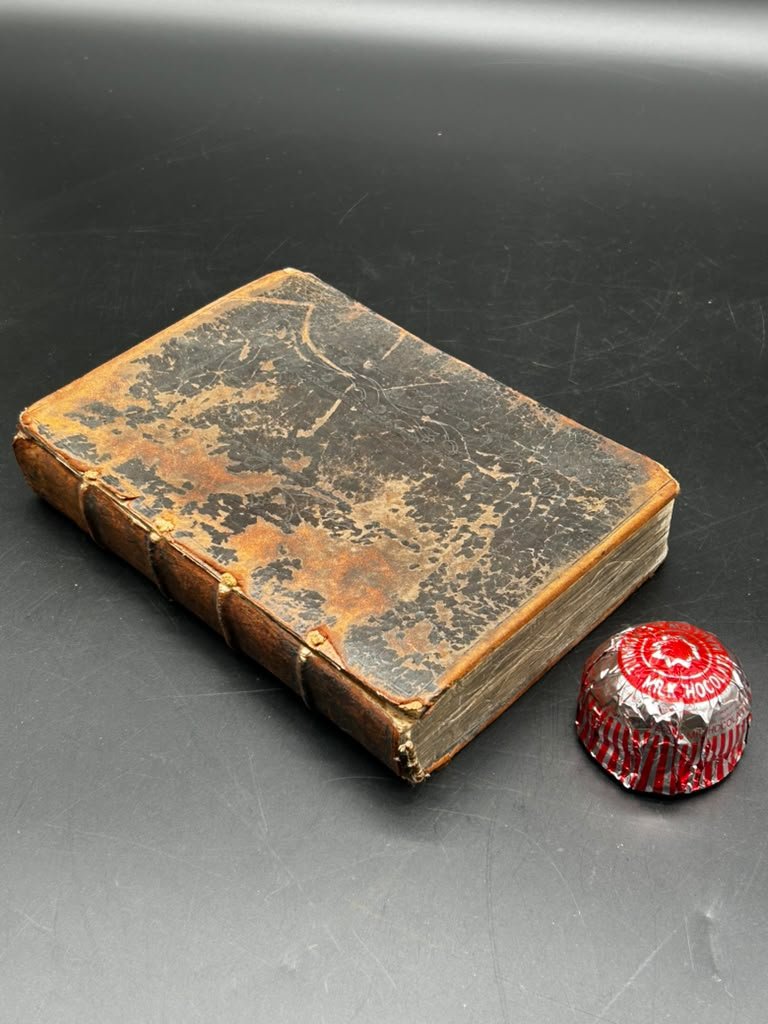
Scarce Renaissance octavo Latin Vulgate Bible (circa 1560–1590, likely printed in Lyon, Antwerp, or Venice) featuring double-column Roman text with italic chapter summaries (Argumenta), marginal cross-references, and fine Renaissance woodcut illustrations—including the dramatic full-column woodcut at the opening of Isaiah (Prophetia Esaiae) depicting the martyrdom of the Prophet Isaiah being sawn in half under King Manasseh, flanked by decorative typographic borders.
Bound in contemporary 16th-century dark brown calf leather over bevelled boards with blind-stamped decorative panelling, four raised spine bands, and notably ornately gauffered (hand-tooled) gilt/toned fore-edges featuring scrolling vine and floral motifs.
Presents in honest, untouched 440-year-old condition: the interior laid rag paper and woodcut impressions remain remarkably crisp, dark, and legible with light marginal toning, while the period leather binding shows expected historic wear including heavy surface scuffing/rubbing to the boards, worn spine ends, and tender/cracked outer hinges. Front board is detached.