

 Image 1 of 5
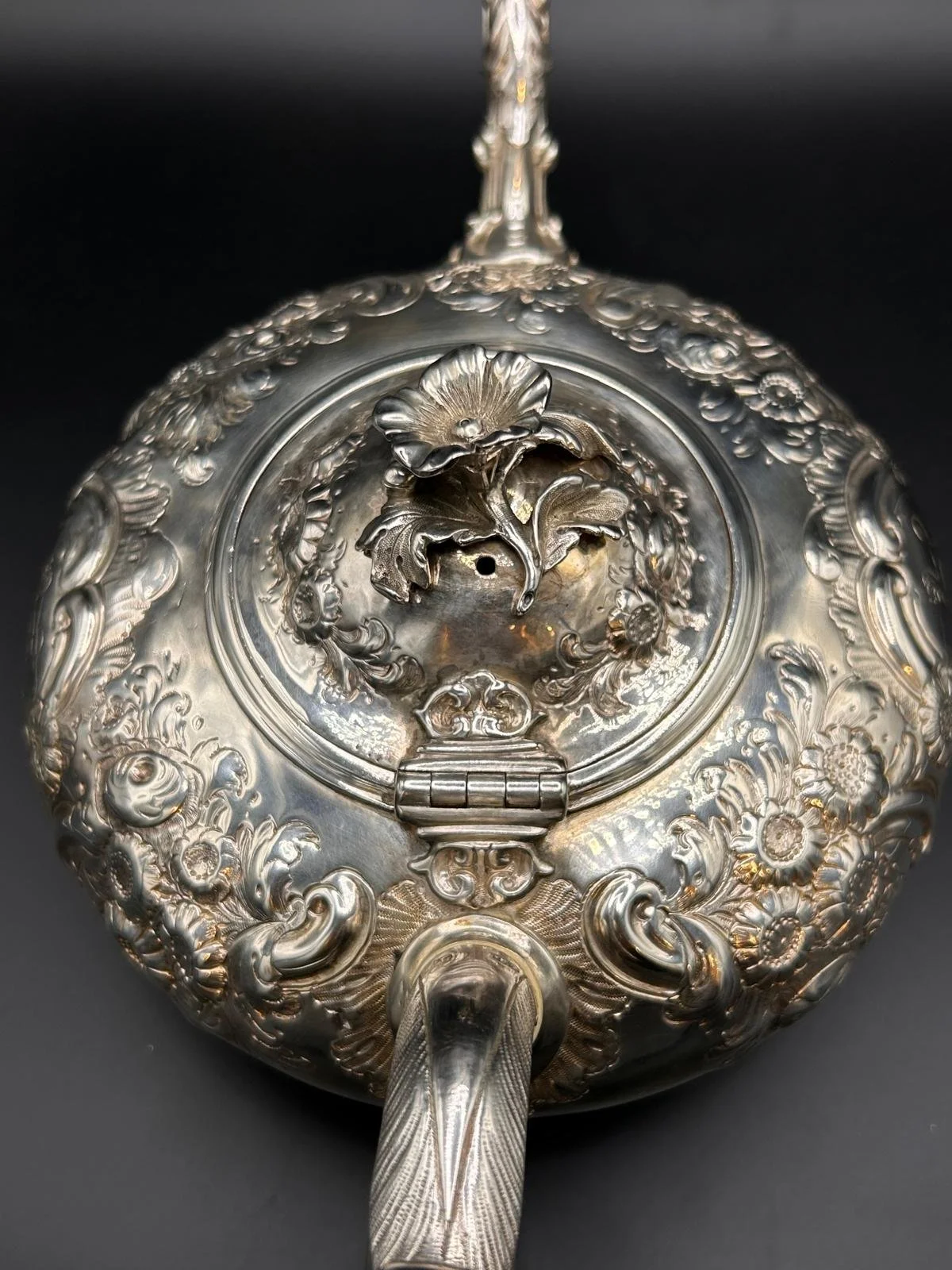 Image 2 of 5
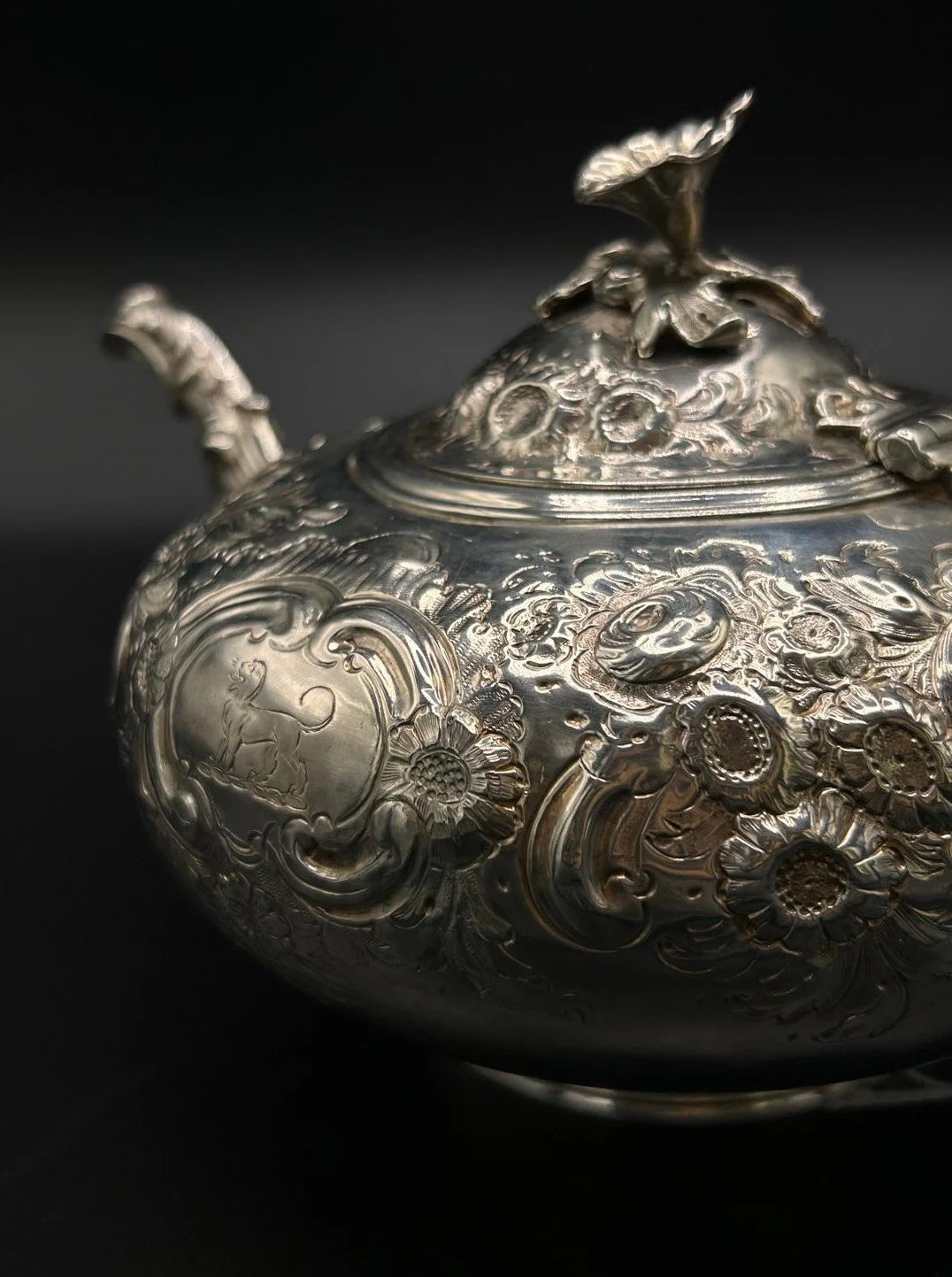 Image 3 of 5
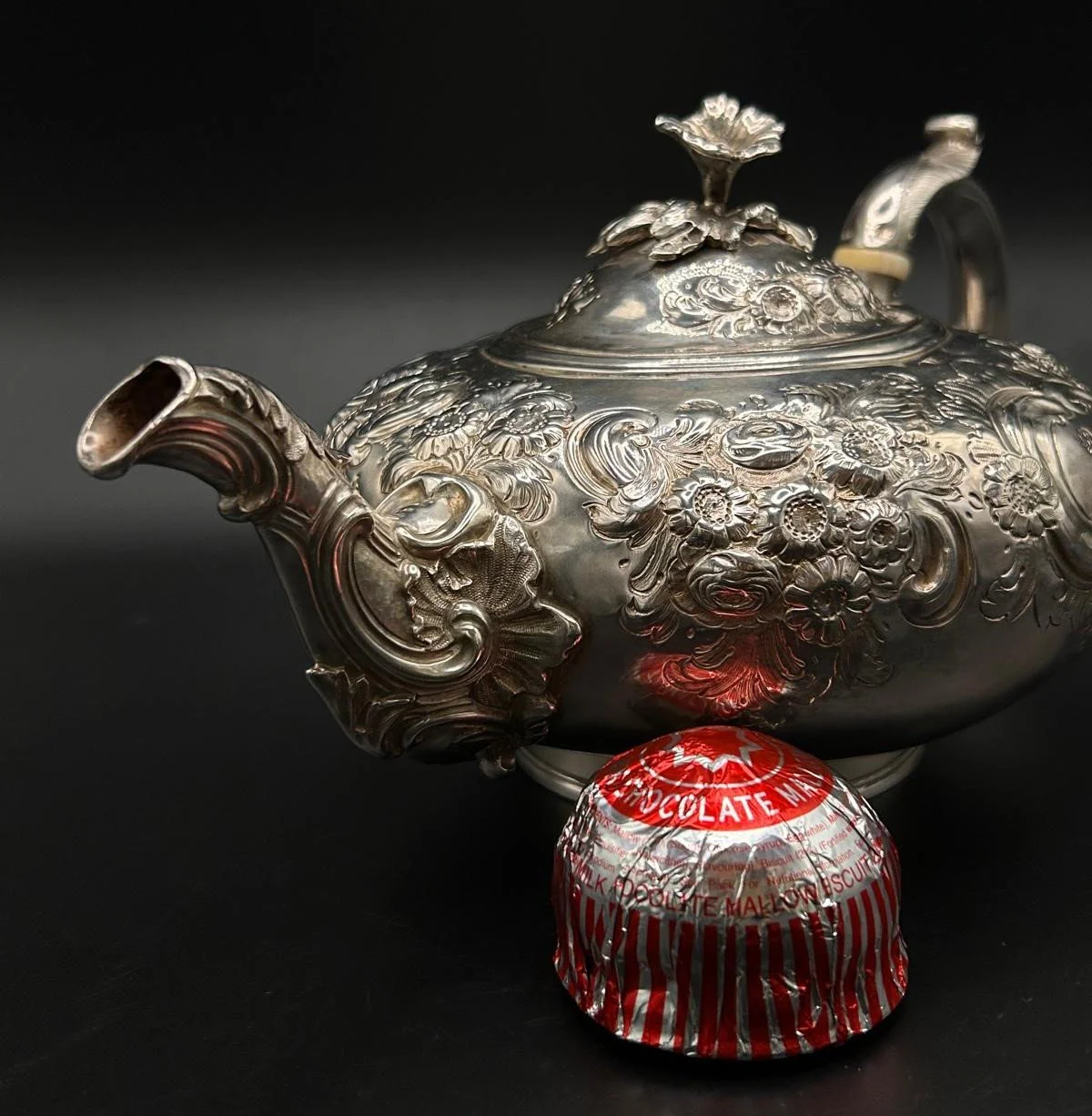 Image 4 of 5
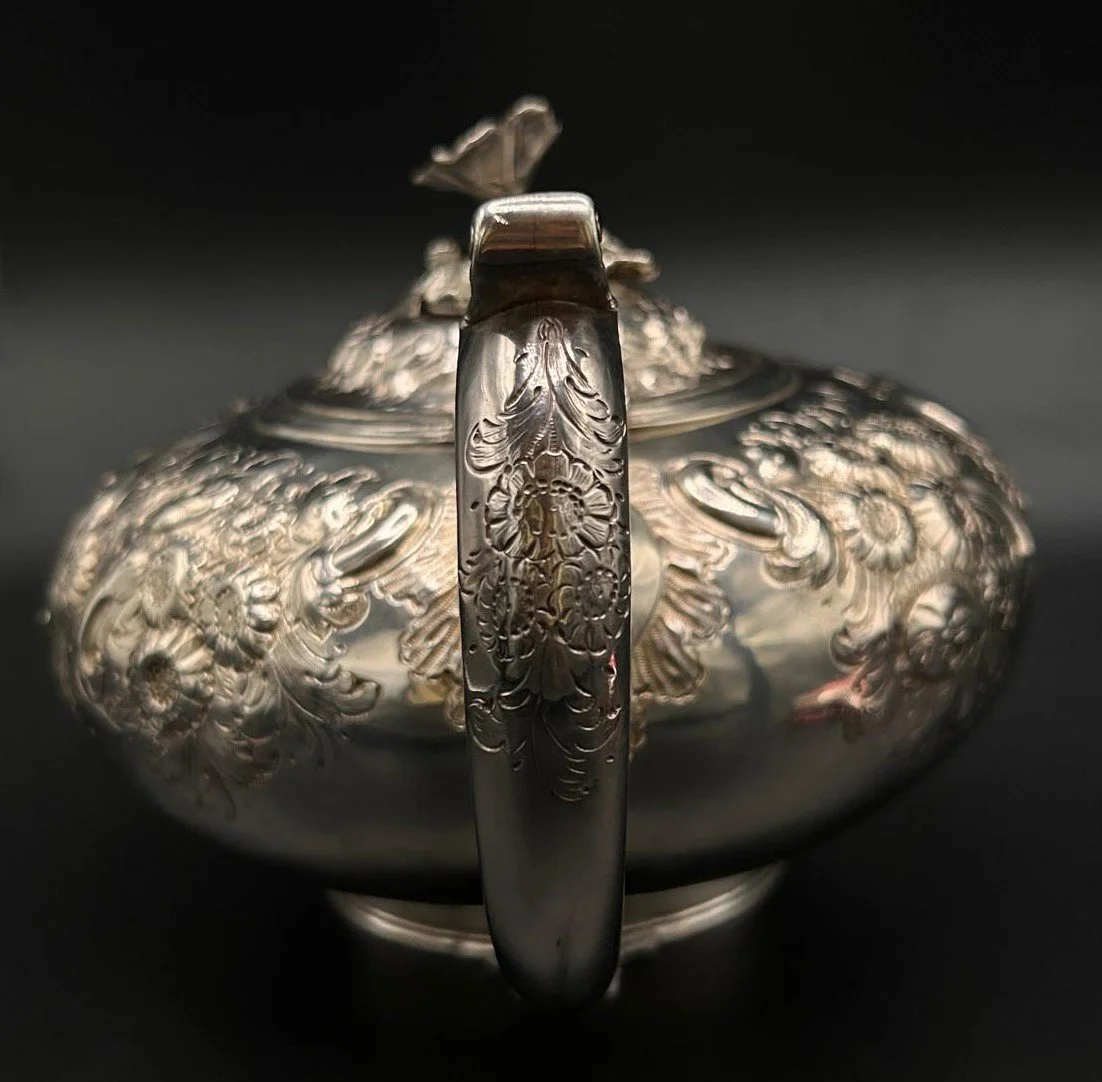 Image 5 of 5
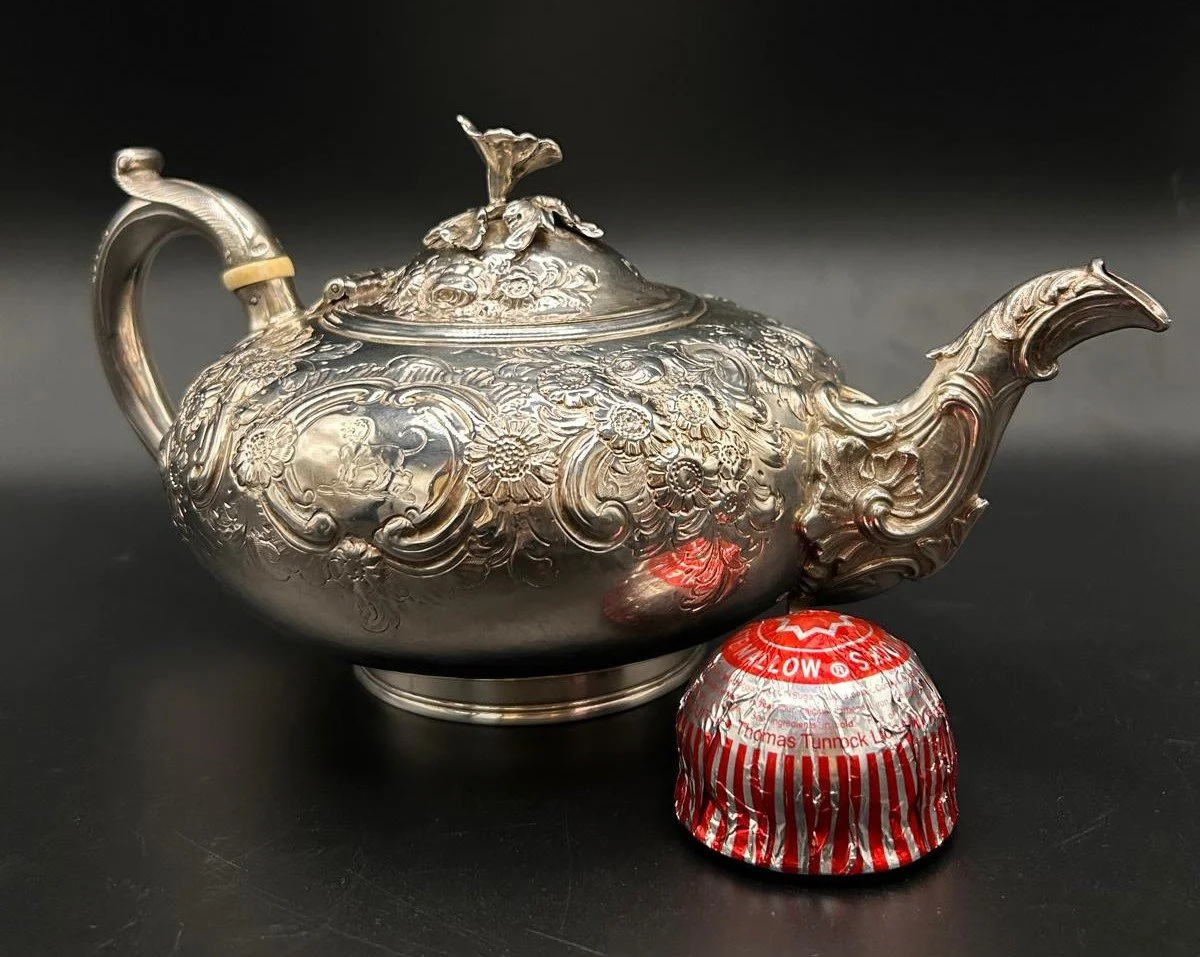
Beautifully repousse decorated early Victorian teapot.
Made by brothers Daniel & Charles Houle, London 1852.
13.7cm high, approx. weight 20.7ozt (643g)
The teapot is of compressed, circular form, the body raised on a shallow circular foot and richly repousse decorated with flowers and scrolls framing cartouches engraved with dog crest, the hinged lid with flower finial and the handle with ivory insulators.
Stunning and surprisingly emblematic of British Social History – read the part below titled ‘context’.
The makers
Daniel and Charles Houle were brothers who took over the business from their father, John Houle, then setting up their own joint mark in 1845 and operated independently until 1884.
As manufacturers, they supplied high-end London retailers who often overstruck the Houle maker’s mark with their own retail brand. Their work is celebrated.
Context - the importance of Tea
Britain was obsessed with tea and wanted to break China's monopoly on production. In 1848–1851, the British East India Company sent botanist Robert Fortune on a mission to secretly bring tea plants and Chinese expertise to India.
By 1852, this mission was in full swing, successfully enabling the British to establish tea plantations in Assam and Darjeeling and secure their own supply, breaking China's monopoly.
In 1852, tea was exceptionally important in Britain, serving as a cornerstone of daily life, a symbol of Victorian respectability, and a vital driver of the British Empire's economy. Tea had transitioned from an elite luxury to an everyday necessity for all social classes, fuelled by increased availability, falling prices, and the rise of tea-drinking rituals.
The mid-1860s marked the solidification of "afternoon tea" as a fashionable social event. In 1865, The Langham Hotel in London became the first hotel in the world to serve afternoon tea, establishing it as a public event.
We deliver items locally, ship nationwide and globally
Beautifully repousse decorated early Victorian teapot.
Made by brothers Daniel & Charles Houle, London 1852.
13.7cm high, approx. weight 20.7ozt (643g)
The teapot is of compressed, circular form, the body raised on a shallow circular foot and richly repousse decorated with flowers and scrolls framing cartouches engraved with dog crest, the hinged lid with flower finial and the handle with ivory insulators.
Stunning and surprisingly emblematic of British Social History – read the part below titled ‘context’.
The makers
Daniel and Charles Houle were brothers who took over the business from their father, John Houle, then setting up their own joint mark in 1845 and operated independently until 1884.
As manufacturers, they supplied high-end London retailers who often overstruck the Houle maker’s mark with their own retail brand. Their work is celebrated.
Context - the importance of Tea
Britain was obsessed with tea and wanted to break China's monopoly on production. In 1848–1851, the British East India Company sent botanist Robert Fortune on a mission to secretly bring tea plants and Chinese expertise to India.
By 1852, this mission was in full swing, successfully enabling the British to establish tea plantations in Assam and Darjeeling and secure their own supply, breaking China's monopoly.
In 1852, tea was exceptionally important in Britain, serving as a cornerstone of daily life, a symbol of Victorian respectability, and a vital driver of the British Empire's economy. Tea had transitioned from an elite luxury to an everyday necessity for all social classes, fuelled by increased availability, falling prices, and the rise of tea-drinking rituals.
The mid-1860s marked the solidification of "afternoon tea" as a fashionable social event. In 1865, The Langham Hotel in London became the first hotel in the world to serve afternoon tea, establishing it as a public event.
We deliver items locally, ship nationwide and globally