Poyntzfield House on the Black Isle by Ewan Cameron
£400.00
An impressionist style landscape painting executed in oil on a portrait-oriented canvas.
61cm W * 51cm H
Painted in expressive, loose brushwork, this original canvas by Highland artist Ewan Cameron captures the warm pink-ochre facade of Poyntzfield House, a historic 18th-century Georgian mansion situated near Cromarty on the Black Isle. Framed by lush greenery, autumn foliage, and a reflective garden pond in the foreground, the composition highlights the building's distinctive three-sided courtyard, central triangular pediment, and rooftop cupola beneath a soft, cloud-streaked sky. Cameron, a respected local artist and art teacher who lived in Fortrose and taught in Tain and Dingwall, frequently drew inspiration from the landscapes and heritage architecture surrounding the Cromarty Firth, bringing a vibrant sense of light and movement to this quintessential Highland scene.
The painting is mounted on a light wood stretcher with the canvas stapled to the sides. The verso of the stretcher bears handwritten markings in dark ink that read "20 @ 20" and "SH". No artist signature, date, or other identifying marks are visible on the front or back of the work.


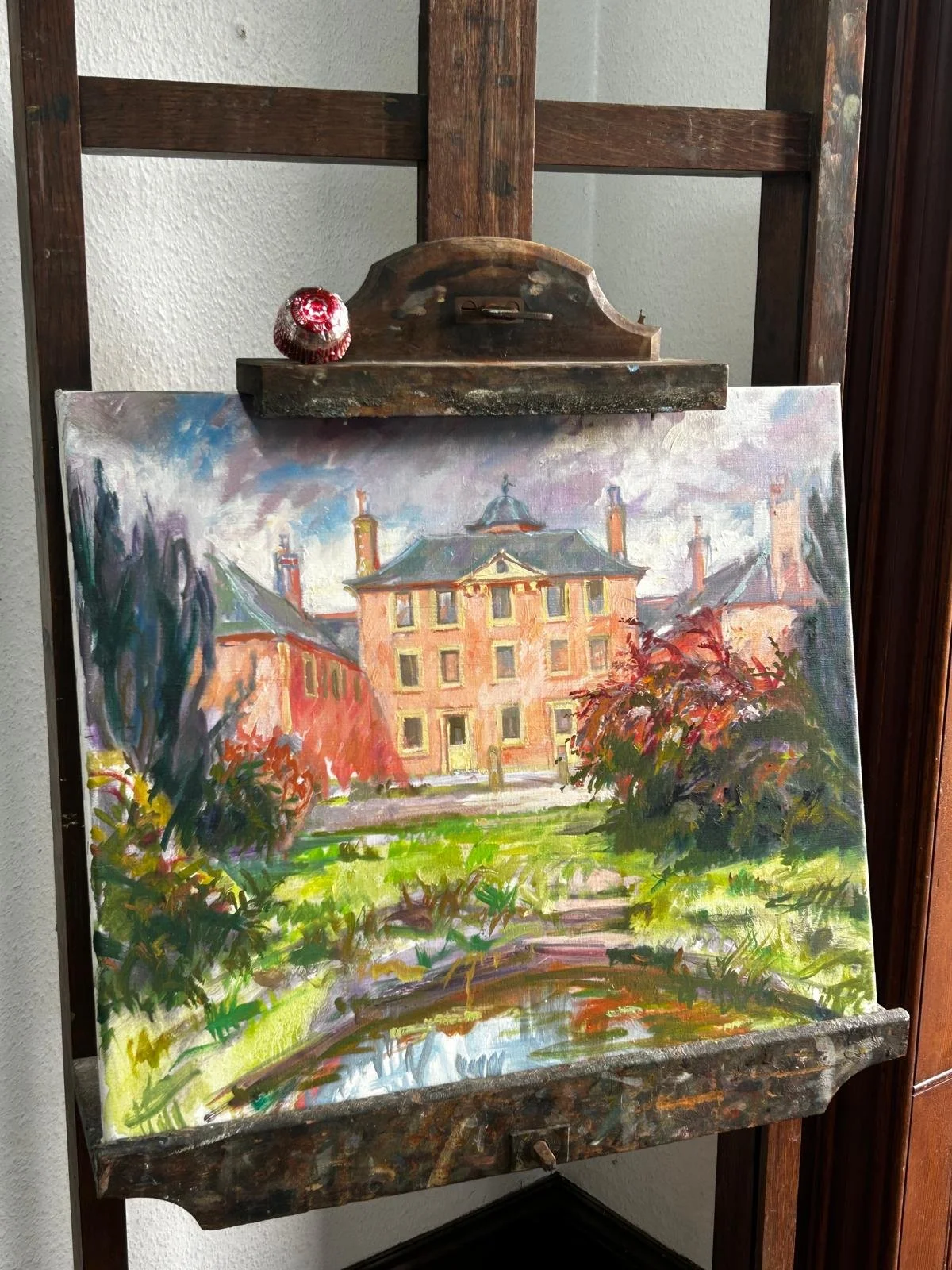 Image 1 of 3
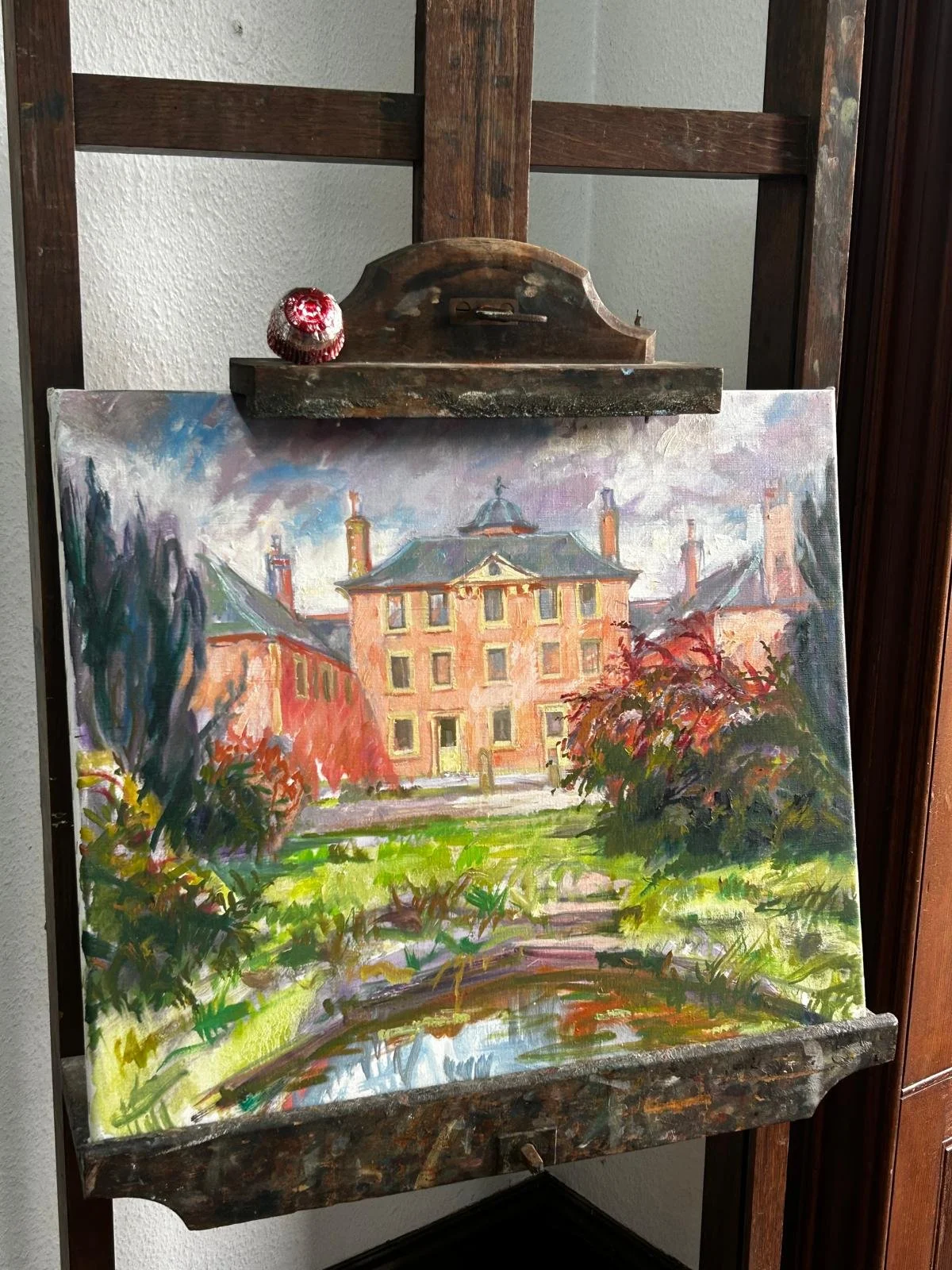 Image 2 of 3
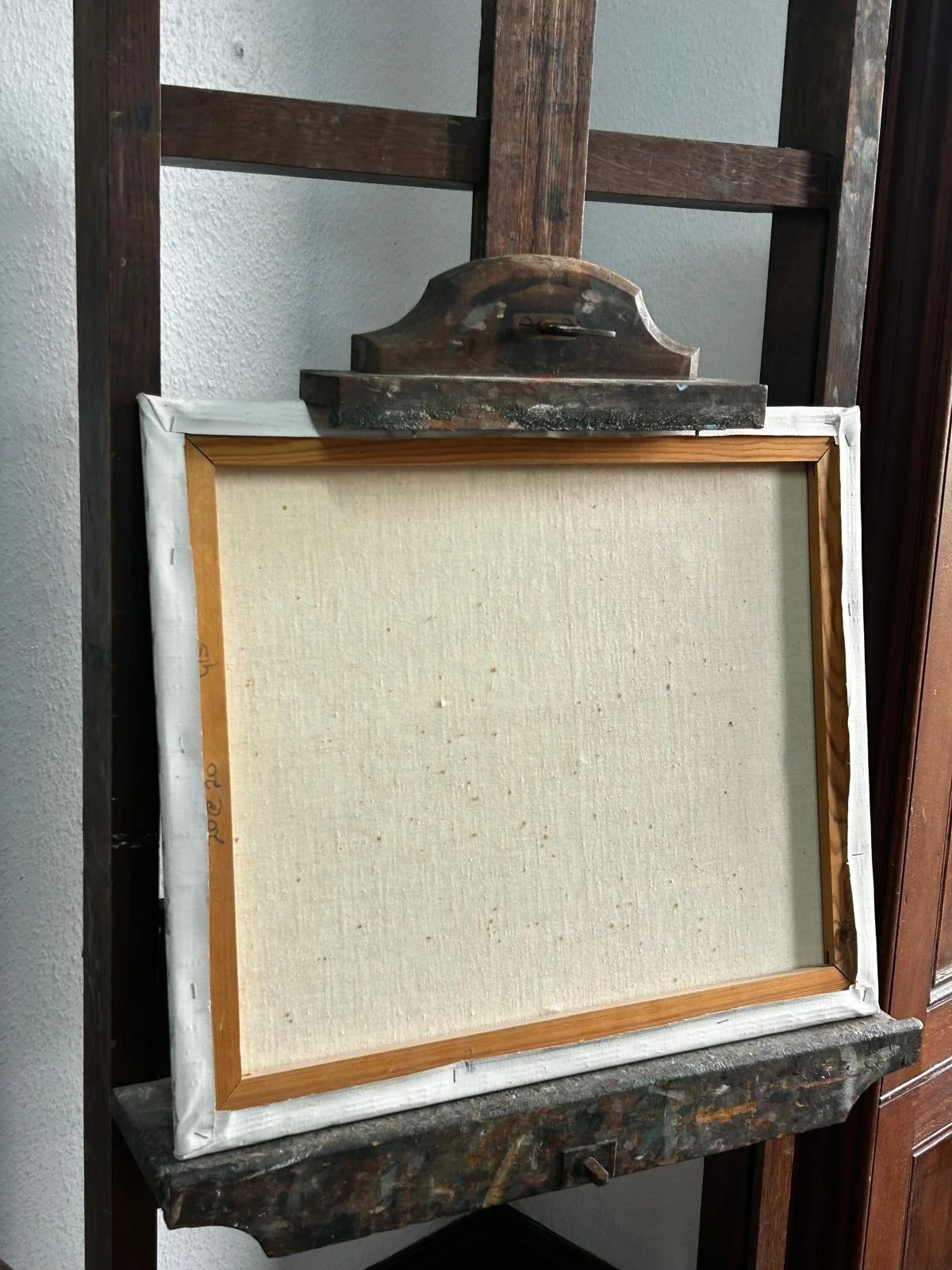 Image 3 of 3