

 Image 1 of 5
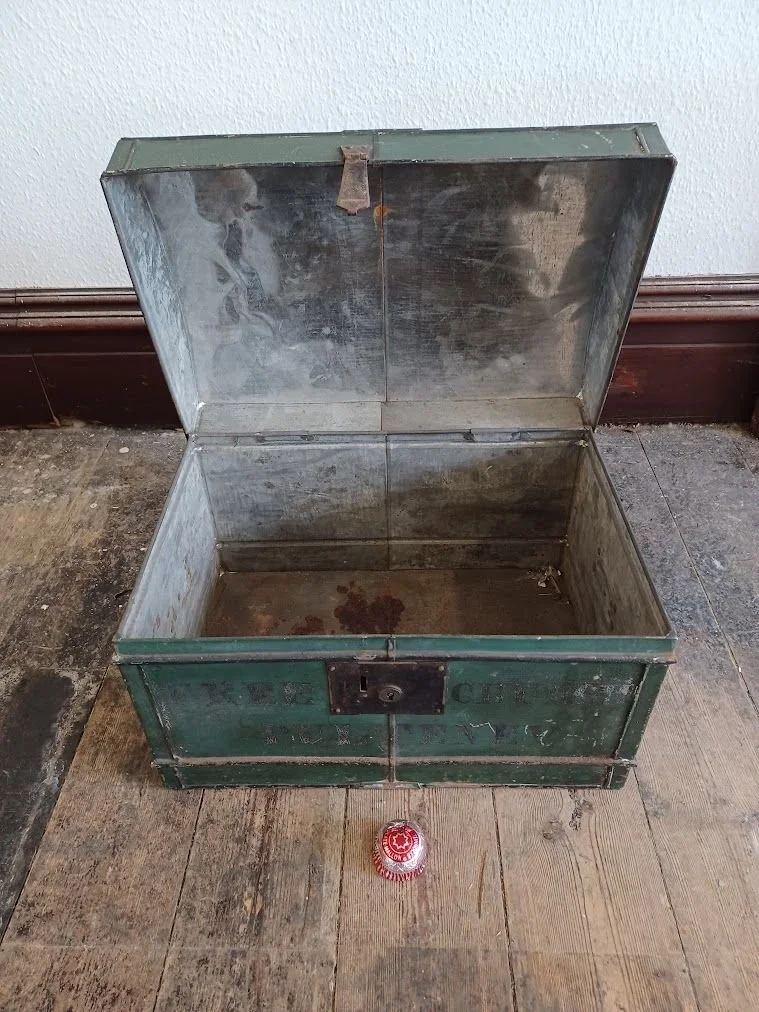 Image 2 of 5
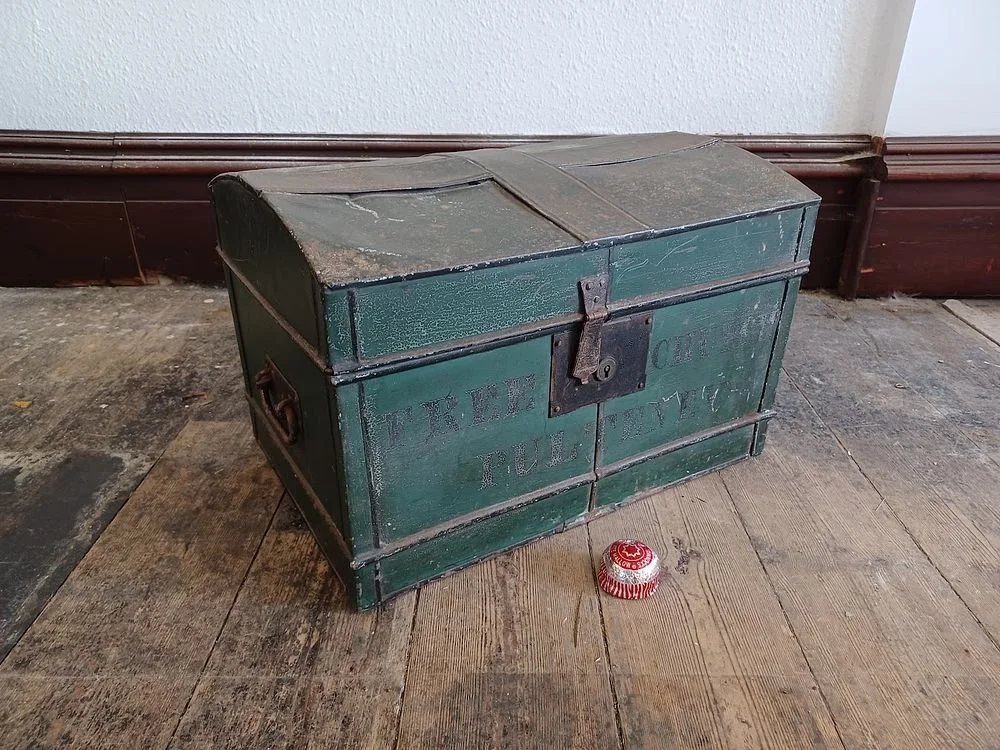 Image 3 of 5
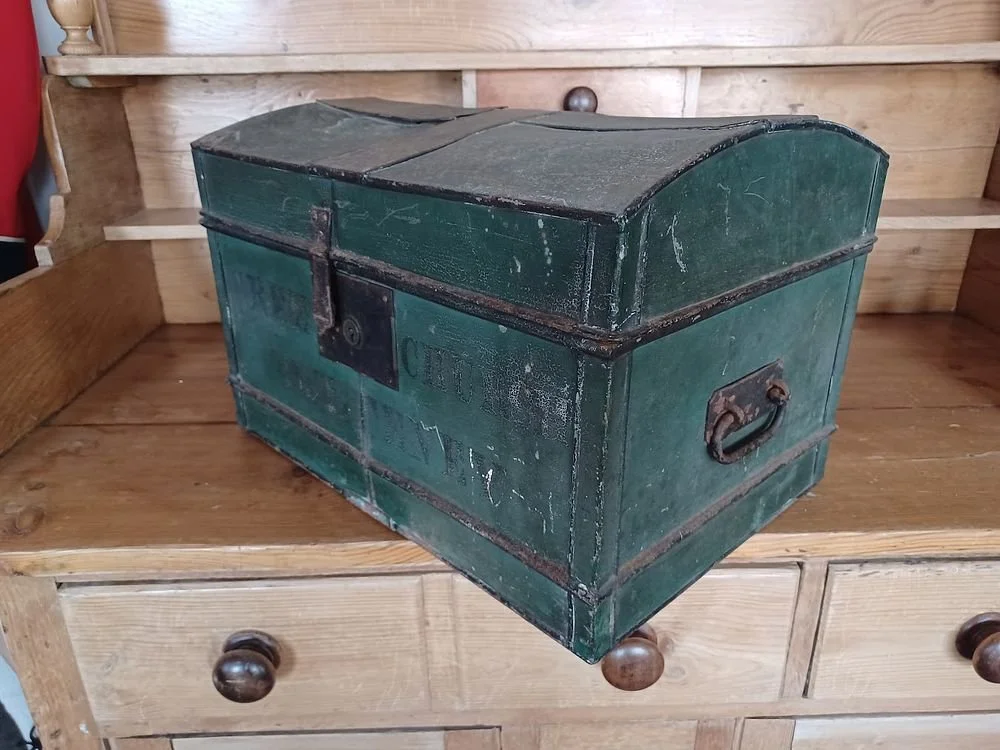 Image 4 of 5
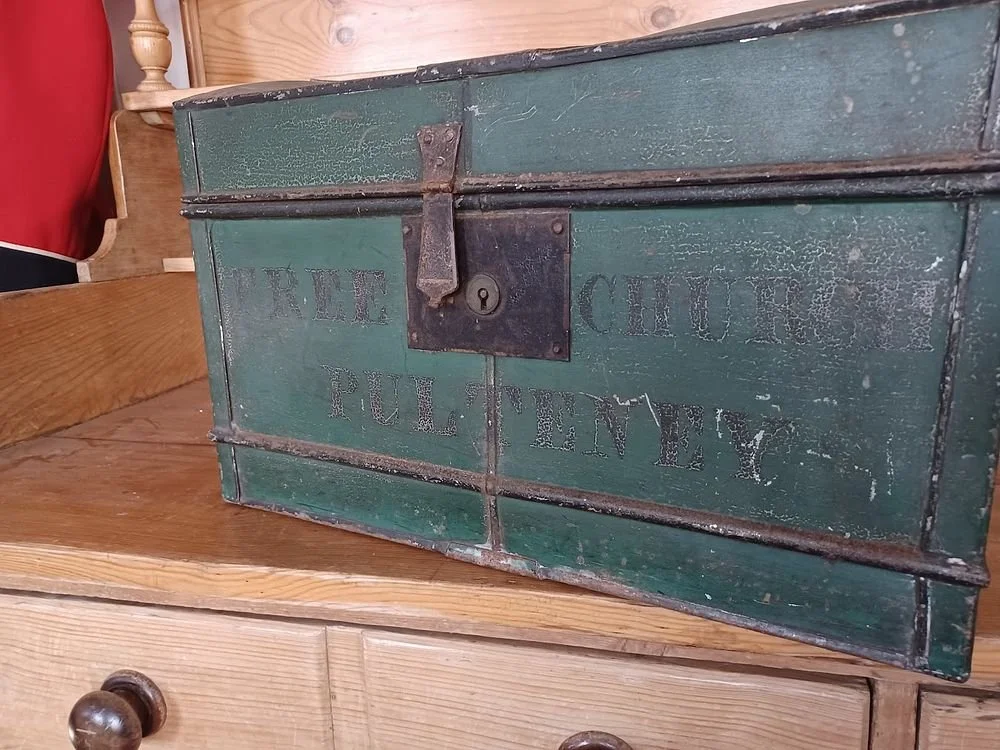 Image 5 of 5
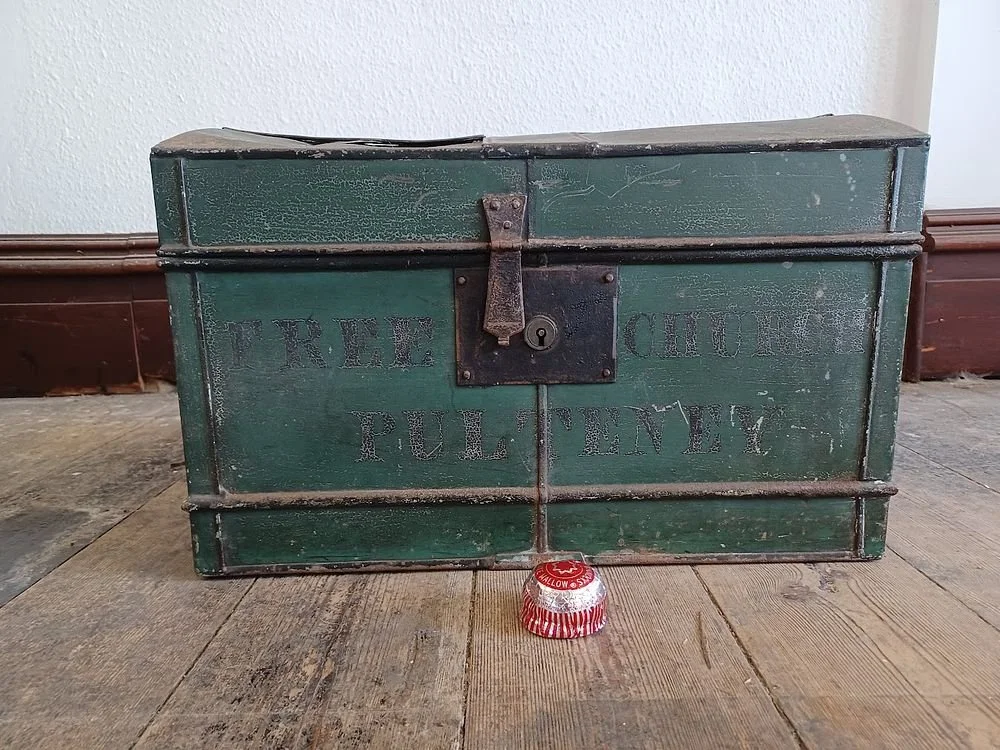
Once a strong box for the valuables of the church - it now evokes a tin box for the eponymous Whisky Distillery.
We love seeing so much Social History kept into one wee box.
Pulteneytown Free Church, originally part of the Free Church of Scotland, was built in 1842 as part of the planned settlement of Pulteneytown in Wick. After the Disruption of 1843, it became Pulteneytown Free Church. It later became a United Free Church in 1900 and then a Church of Scotland in 1929, known as Wick Central Church until its closure in 1990. The church building, now part of the East Caithness Church of Scotland, is located in Argyle Square.
Pulteney town is now an area of Wick on the south side of the River Wick. Until 1902 Pulteney town was administered separately from the Royal Burgh of Wick.
Pulteney town takes its name from Sir William Pulteney, a governor of the British Fisheries Society, who also commissioned Robert Adam to build the Pulteney Bridge in Bath. In the early years of the 19th century Sir William commissioned Britain's leading civil engineer, Thomas Telford, to design and supervise the creation of a major new herring fishing town and harbour at the estuary of the River Wick.
Pulteneytown was so named after the death of Sir William in 1805 and became a major player in the 19th-century herring boom. It was built in order to supply work to the Gaels evicted during the Highland Clearances.
During this boom period the harbour was expanded still further by local shipbuilder James Bremner. History of this era is preserved in the collections of Wick Heritage Museum.
As created by the British Fisheries Society, Pulteneytown consisted of Lower Pulteney and Upper Pulteney. Lower Pulteney was primarily a working area, built on a sandbank behind the harbour. Upper Pulteney was primarily a residential area, on higher ground.
Pulteneytown Parish Church (of the Church of Scotland) is located in Argyle Square and was opened in 1842. Additional hall accommodation has been added and the main church completely renovated to a very high standard for the needs of a twenty-first century congregation. Services are held twice every Sunday.
The Old Pulteney whisky distillery is in the Pulteneytown area. The first Caithness Glass factory was also in this area
Once a strong box for the valuables of the church - it now evokes a tin box for the eponymous Whisky Distillery.
We love seeing so much Social History kept into one wee box.
Pulteneytown Free Church, originally part of the Free Church of Scotland, was built in 1842 as part of the planned settlement of Pulteneytown in Wick. After the Disruption of 1843, it became Pulteneytown Free Church. It later became a United Free Church in 1900 and then a Church of Scotland in 1929, known as Wick Central Church until its closure in 1990. The church building, now part of the East Caithness Church of Scotland, is located in Argyle Square.
Pulteney town is now an area of Wick on the south side of the River Wick. Until 1902 Pulteney town was administered separately from the Royal Burgh of Wick.
Pulteney town takes its name from Sir William Pulteney, a governor of the British Fisheries Society, who also commissioned Robert Adam to build the Pulteney Bridge in Bath. In the early years of the 19th century Sir William commissioned Britain's leading civil engineer, Thomas Telford, to design and supervise the creation of a major new herring fishing town and harbour at the estuary of the River Wick.
Pulteneytown was so named after the death of Sir William in 1805 and became a major player in the 19th-century herring boom. It was built in order to supply work to the Gaels evicted during the Highland Clearances.
During this boom period the harbour was expanded still further by local shipbuilder James Bremner. History of this era is preserved in the collections of Wick Heritage Museum.
As created by the British Fisheries Society, Pulteneytown consisted of Lower Pulteney and Upper Pulteney. Lower Pulteney was primarily a working area, built on a sandbank behind the harbour. Upper Pulteney was primarily a residential area, on higher ground.
Pulteneytown Parish Church (of the Church of Scotland) is located in Argyle Square and was opened in 1842. Additional hall accommodation has been added and the main church completely renovated to a very high standard for the needs of a twenty-first century congregation. Services are held twice every Sunday.
The Old Pulteney whisky distillery is in the Pulteneytown area. The first Caithness Glass factory was also in this area