

 Image 1 of 3
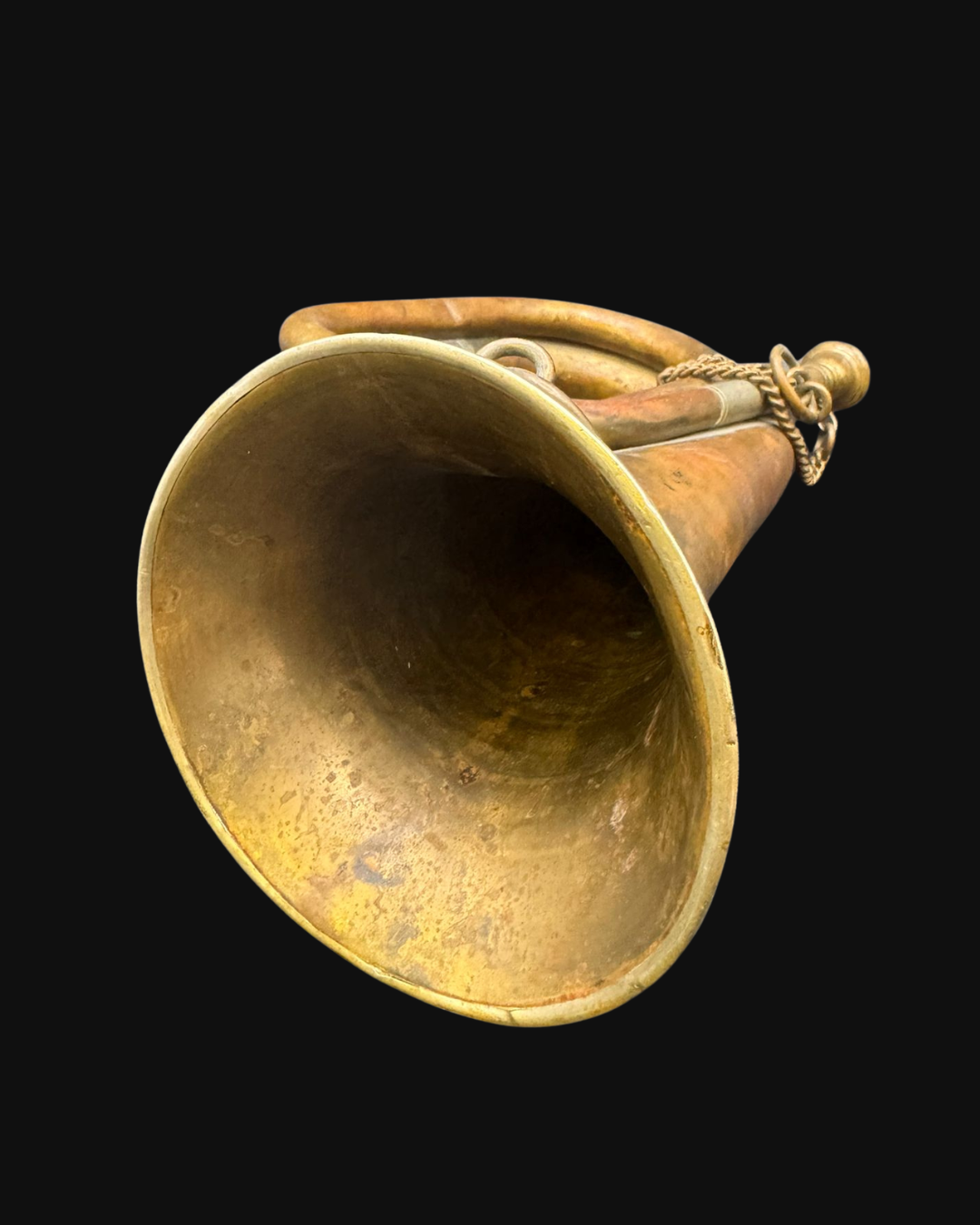 Image 2 of 3
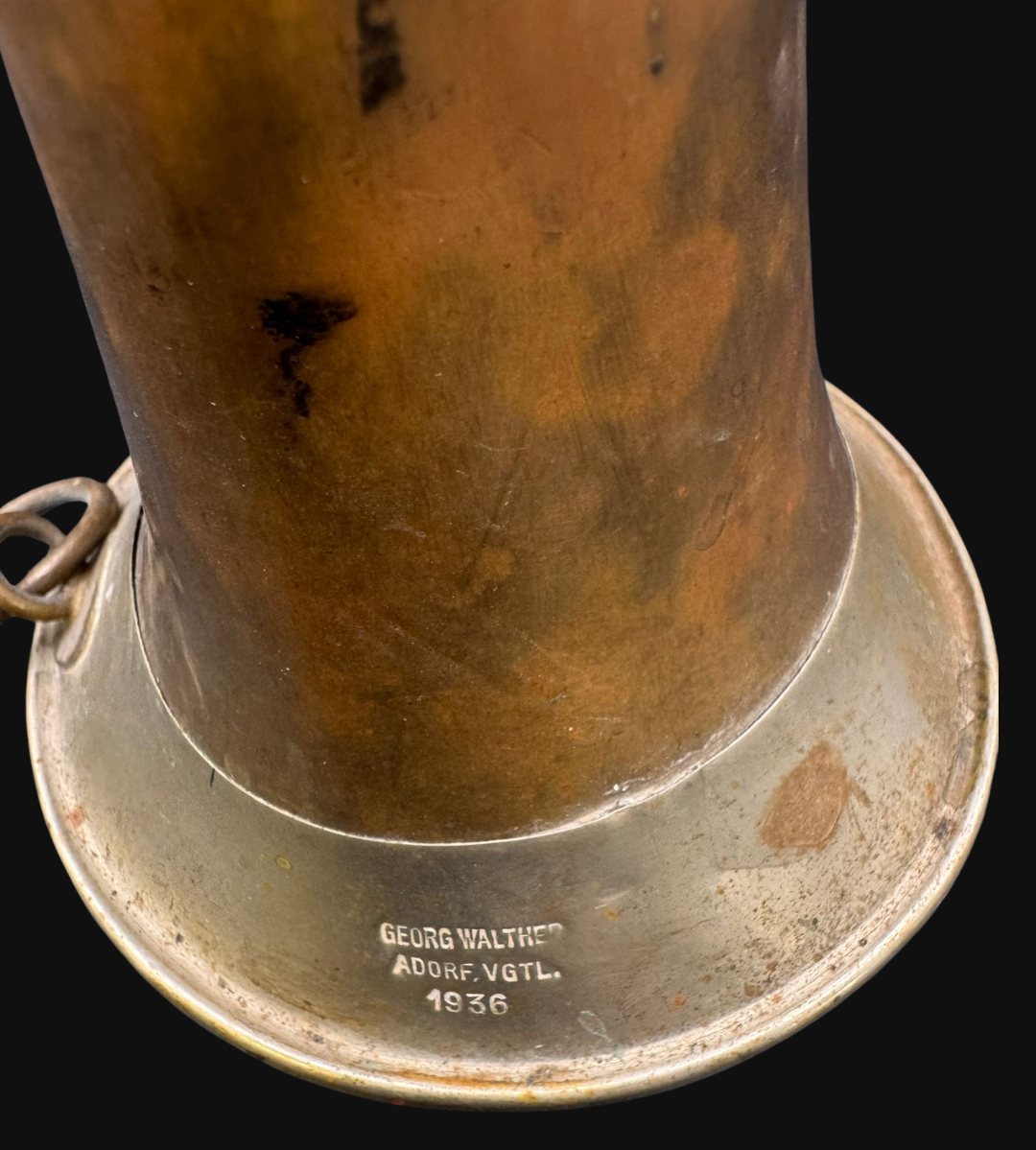 Image 3 of 3
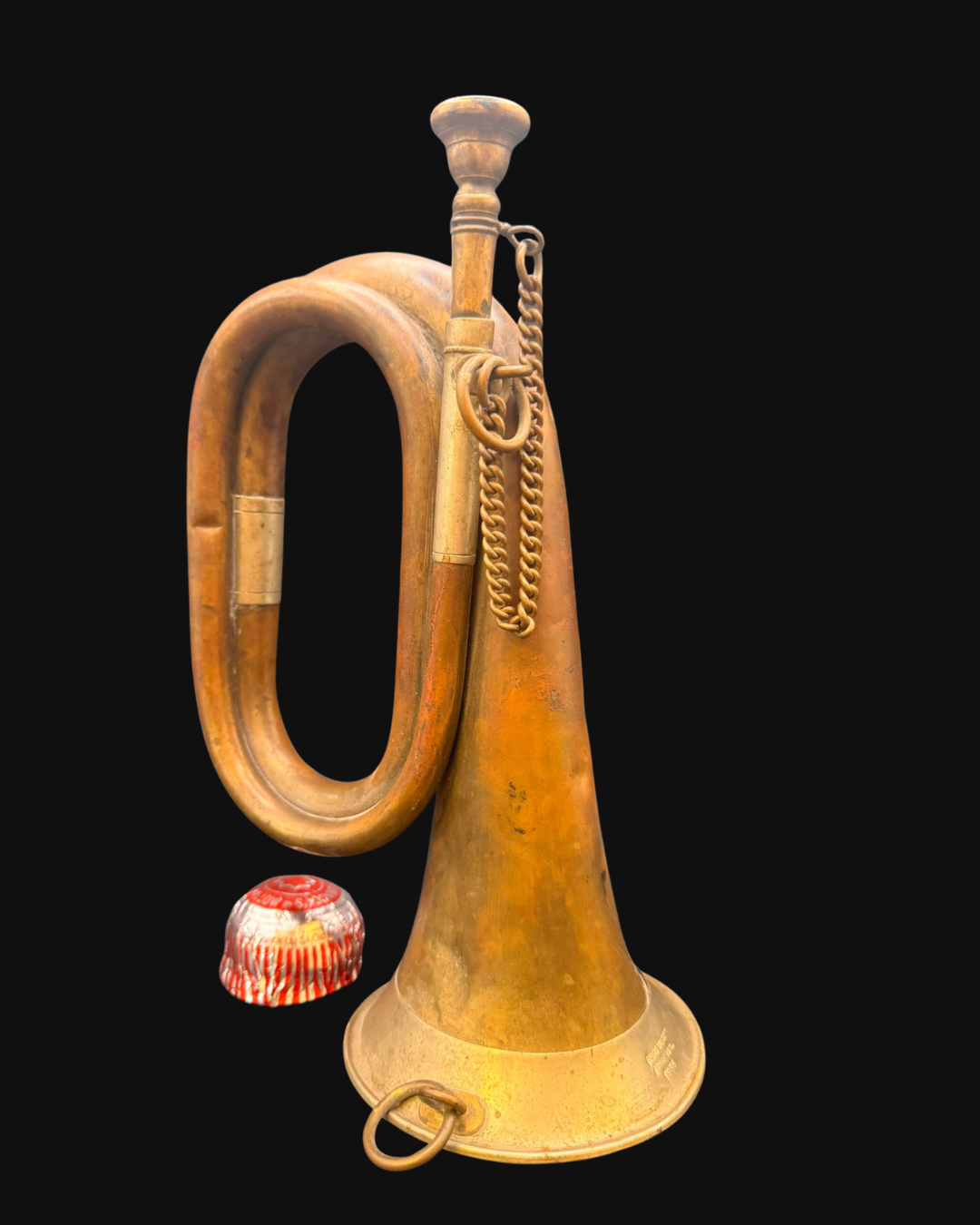
German military bugle, specifically manufactured by George Walther in Adorf, dated 1936.
Key Details
Manufacturer: George Walther, a known maker of musical instruments in Adorf, Germany.
Date: 1936, placing it in the era of the Reichswehr or the early Wehrmacht before World War II began.
Identification (VGTL): While "VGTL" is part of the inscription you noted, similar German bugles often bear markings for military organizations or specific units. For instance, some Third Reich era bugles were used by organizations like the SA (Sturmabteilung) or HJ (Hitler Youth).
Construction: The instrument is made of brass with nickel silver fittings, which was standard for German military brass instruments of this period. It features two carrying rings and a mouthpiece often secured by a chain.
Historical Context
Bugles were essential signaling tools for infantry and cavalry, used to relay commands across the battlefield or mark daily routines in camp. Unlike trumpets, bugles have no valves, meaning the player controls the pitch entirely through lip pressure and air speed.
British Band Instrument Company
By the time this bugle was made in 1936, the German military was rapidly expanding under the Nazi regime, and these instruments remained standard equipment for traditional signaling and ceremonial use even as modern communication technology began to take over.
German military bugle, specifically manufactured by George Walther in Adorf, dated 1936.
Key Details
Manufacturer: George Walther, a known maker of musical instruments in Adorf, Germany.
Date: 1936, placing it in the era of the Reichswehr or the early Wehrmacht before World War II began.
Identification (VGTL): While "VGTL" is part of the inscription you noted, similar German bugles often bear markings for military organizations or specific units. For instance, some Third Reich era bugles were used by organizations like the SA (Sturmabteilung) or HJ (Hitler Youth).
Construction: The instrument is made of brass with nickel silver fittings, which was standard for German military brass instruments of this period. It features two carrying rings and a mouthpiece often secured by a chain.
Historical Context
Bugles were essential signaling tools for infantry and cavalry, used to relay commands across the battlefield or mark daily routines in camp. Unlike trumpets, bugles have no valves, meaning the player controls the pitch entirely through lip pressure and air speed.
British Band Instrument Company
By the time this bugle was made in 1936, the German military was rapidly expanding under the Nazi regime, and these instruments remained standard equipment for traditional signaling and ceremonial use even as modern communication technology began to take over.