4.6.26
BROWN FURNITURE DOESN’T BELONG IN A MODERN HOME
A short sighted viewpoint; our response is always the same.
Be careful, this beautiful period item may have more character than your 'modern home' can handle....
.
Let me explain.
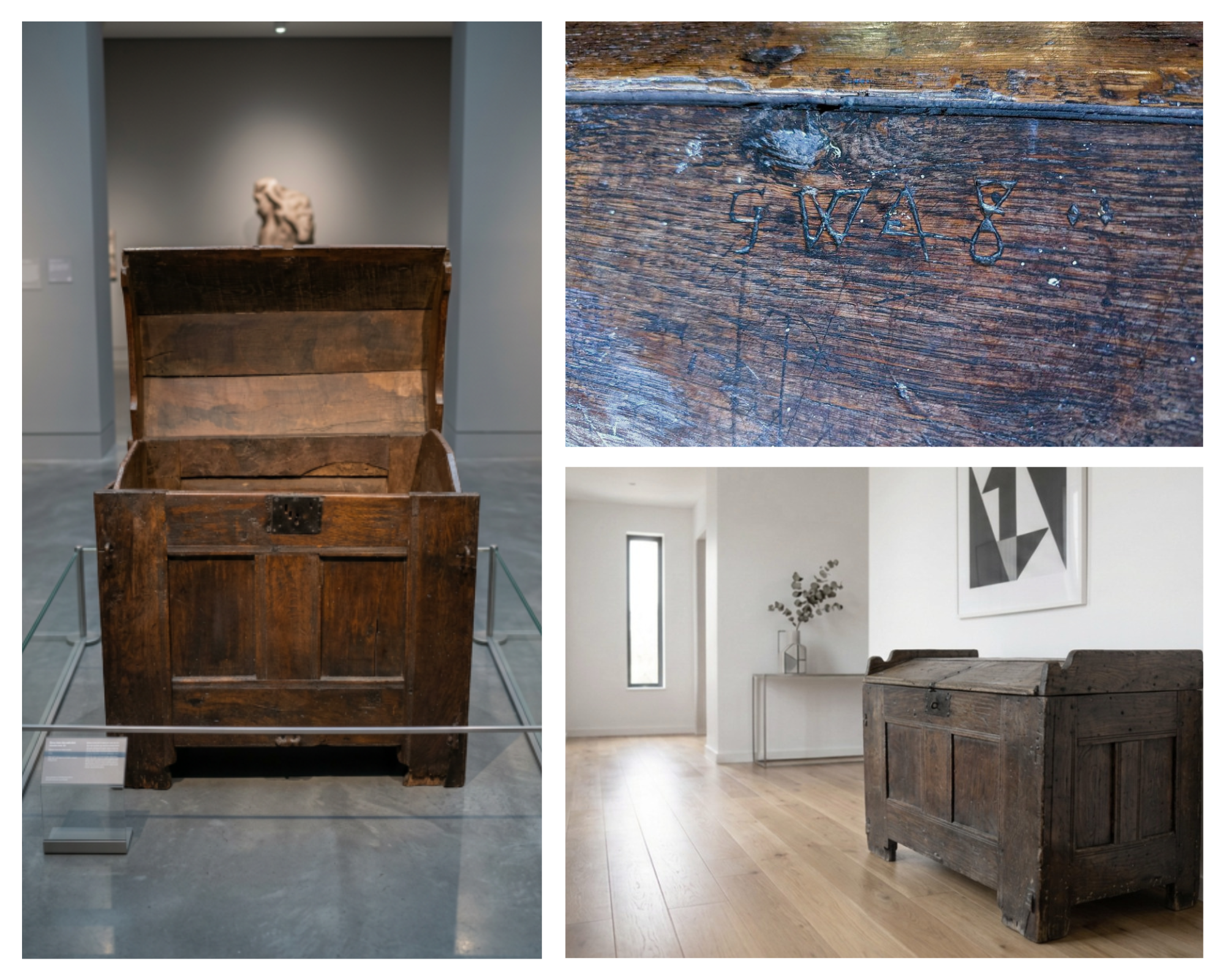
The features within the modern home exist because of this 500 year old innovation; an Ark.
It has outlasted 23 British Monarchs and 15 Empries. It is likely to outlast the lifespan of your 'modern home' too.
It pioneered flat pack furniture 400 years before Ikea was started in a garden shed.
It pioneered indoor food storage & indoor food preparation that led to your kitchen being indoors.
It almost led to Shakespeare being jailed for stockpiling food in his own Ark to feed his, and his neighbours', families during time of famine. (search the BBC for the article)
.
It has more character, history and personality than a 'modern house' can hope to enjoy; and it does it in some style too.
.
Time you started looking at 'brown furniture' differently.
IS A CHAIR MORE THAN JUST A CHAIR?
24.5.26
Yes, when designed by AWN Pugin and helps us value effort and the human experience in a social media, algorithm & AI dominated world.
Augustus Welby Northmore Pugin was the principal visionary and driving force of the Gothic Revival Movement; a romantic & ideological protest to the Industrial Revolution. It was the forerunner to the celebrated Arts & Crafts, Aesthetic, Art Deco and Art Nouveau movements.
Pugin’s vision provides profound lessons for today’s AI era. His arguments for preserving human dignity, valuing craftsmanship over sheer output and retaining a moral compass; remind us not to let algorithms dictate the value of the human experience.
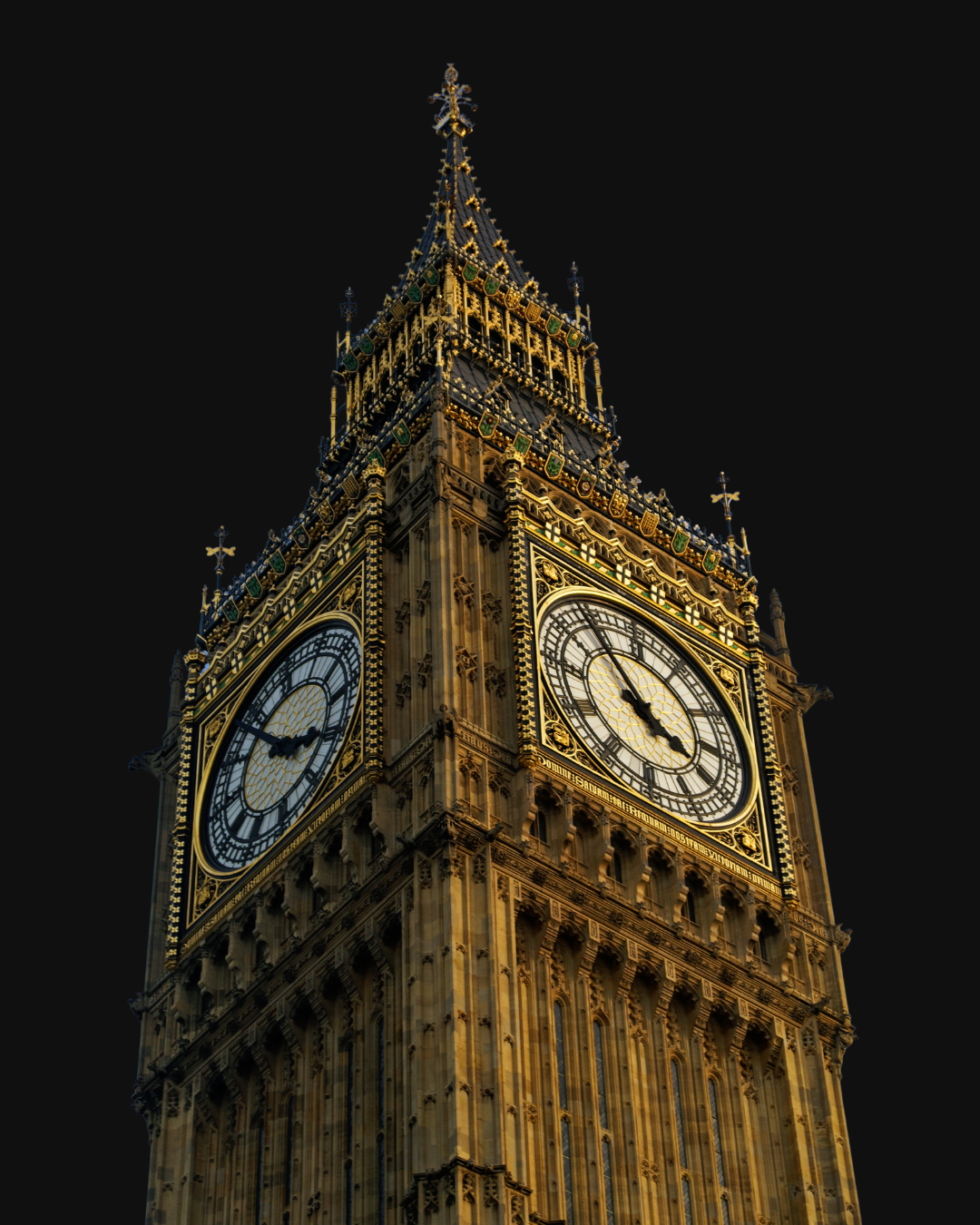
The name might not be well known outside Antique, Design & Architecture circles but his work is celebrated globally. As one of the two principal designers of the Houses of Parliament; he was responsible for the face of Big Ben, the Queen Elizabeth Tower, the Gothic interiors, furnishings and finishes to the Houses of Parliament.
He despised the Industrial Revolution and mass production, which he believed stripped labour of its dignity. He was an obsessive polymath, prolific writer, liturgical designer, and social critic whose vision extended to every aspect of daily life and material culture.
After completing the design for Big Ben, Pugin suffered a full breakdown and was unable to recognise anyone or speak coherently until he passed some months later at the young age of 41.
His legacy lives on, as did his designs.
Collaboration with J B Crace & Sons
J B Crace & Sons were the Interior Designers to only the highest of English Society with an enviable reputation. Pugin met the Crace family whilst working on the Windsor Castle commission for Queen Victoria.
After meeting Pugin – they changed their business model to reflect Pugin’s brilliance.
J B Crace & Sons won the contract to design and build furniture for the Palace of Westminster (Houses of Parliament) but oddly outsourced the manufacture of their own designs to third partes, choosing only to manufacture furniture design by Pugin.
Pugin Designed, J B Crace & Sons Made
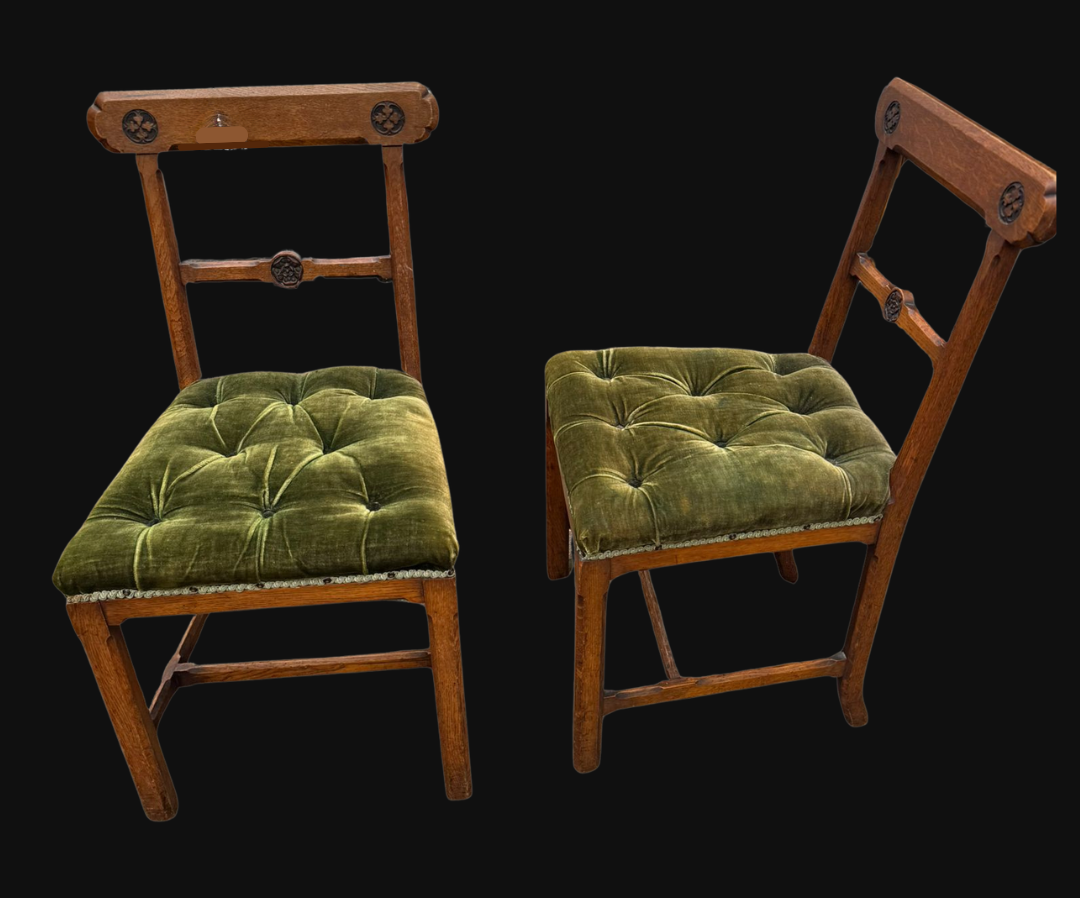
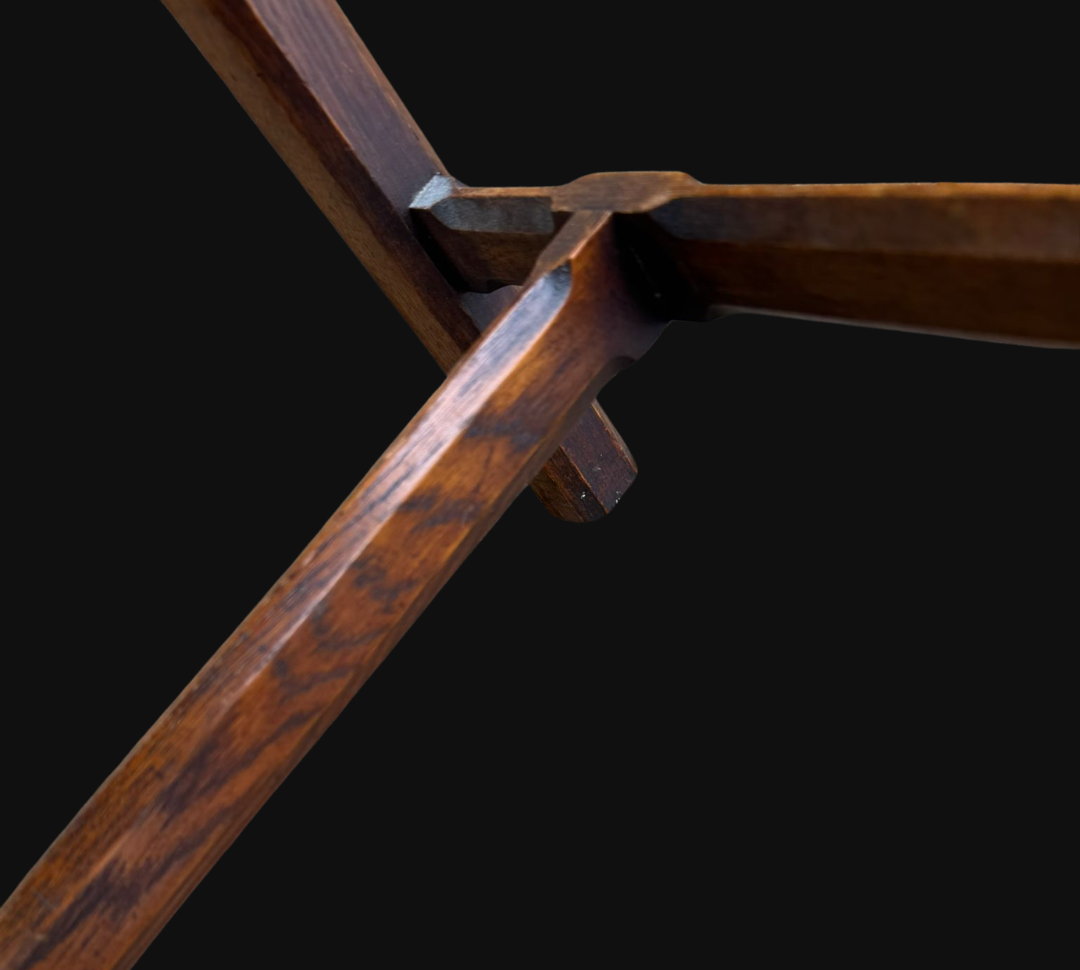
Cheeky has obtained a pair of Gothic Revival chairs designed by AWN Pugin and made by J B Crace & Sons; the tell-tale being the treatment of the bottom of the front legs.
Items like these chairs were made after Pugin’s death around 1865 – 1870. They were also made by Gillows of Lancaster and can retail for around £2,500 each.
Both the Gillows and Crace versions are made from Oak and feature a head rail and back rail with carved florets and chamfered details throughout. The back legs with an extended detail, a little kick out is such a delightful feature.
These chairs are more than just chairs; they are a legacy to one the United Kingdom’s greatest designers and a reminder to appreciate the value of human expression and experience in an increasingly automated, social media and AI influenced world.
They are not only beautiful in form and function but a design concept that delivers an important and worthwhile reminder 150+ years later.

Why is Antique Tain Silver so valuable & sought after?
24.5.26
Antique Tain silver is highly collectible due to its extreme rarity, historical significance as Scottish provincial silver. Because these pieces were rarely sent to major assay offices (like Edinburgh) to avoid heavy taxes, genuine antique examples are incredibly scarce and highly sought after by collectors worldwide.
.
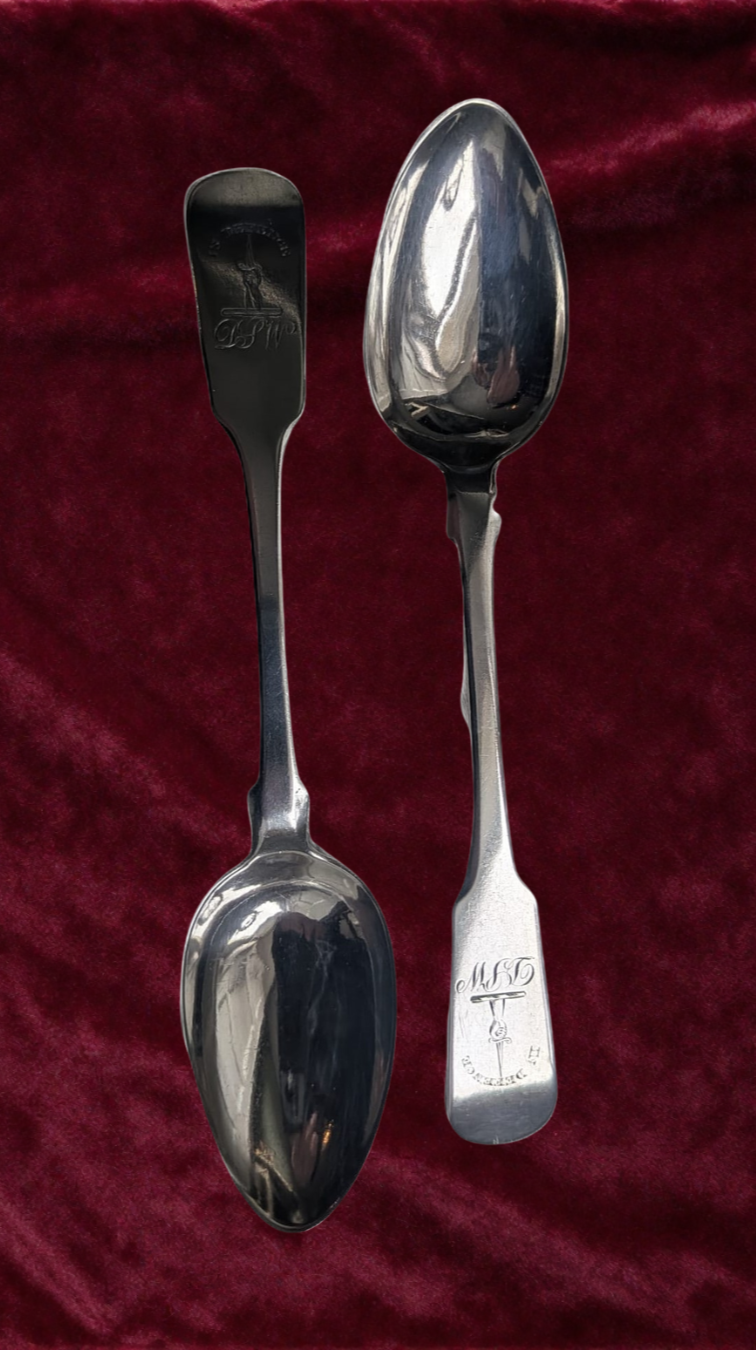
The Cheeky Highlander has a pair of Tain Silver Tablespoons (c 1830) with amazing provenance in stock. They were gifted by Miss Rosa Willamson Ross 22nd Chief of the Clan Ross as a wedding gift to the seller in the 1960s.
.
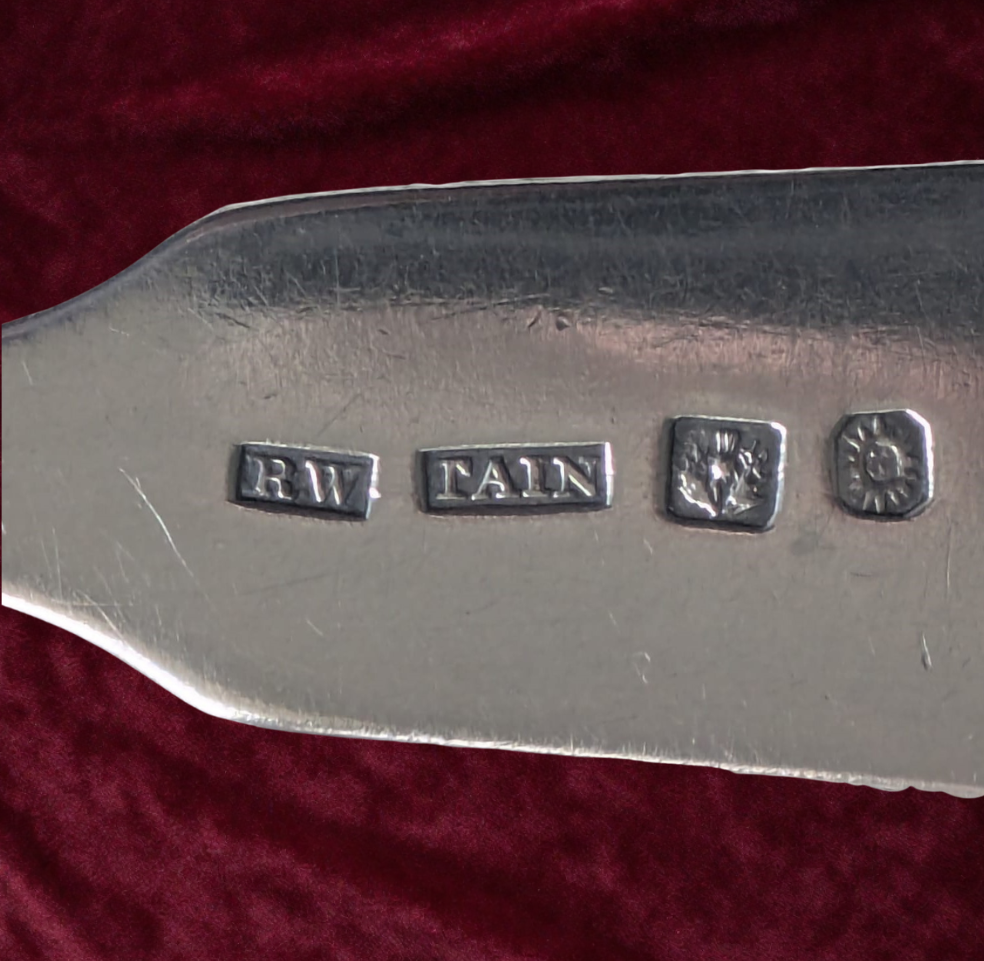
The hallmarks on these Tablespoons are clear and include:
"RW" – the makers mark. Richard Maxwell Wilkie – active in Tain from 1822 – 1841
"Tain"- the rare Scottish Provincial Silver Mark
‘Thistle’ and ‘Sunburst’
.
The front shows the same legend ‘In defence’ over a hand holding a dagger aloft and the letters "DSW" underneath.
.
From the collection owned by Miss Rosa Williamson Ross of Pitcalnie (1869–1968) - a prominent historical figure in Tain, Scotland, serving as the 22nd Chief of Clan Ross and the 13th and last Laird of the Pitcalnie line.
.
Other examples of the collection can be found in the Tain Museum & Clan Ross Centre
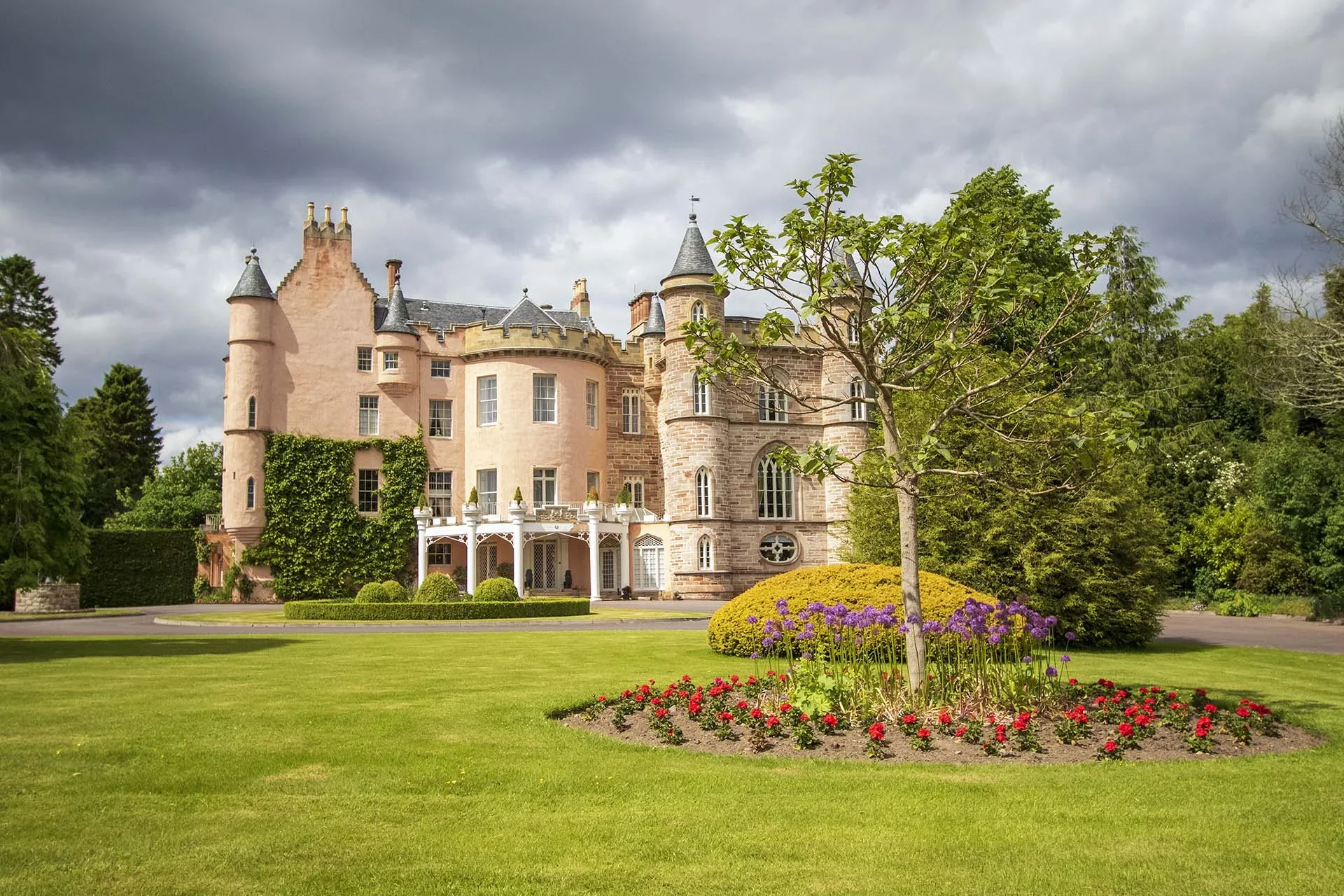
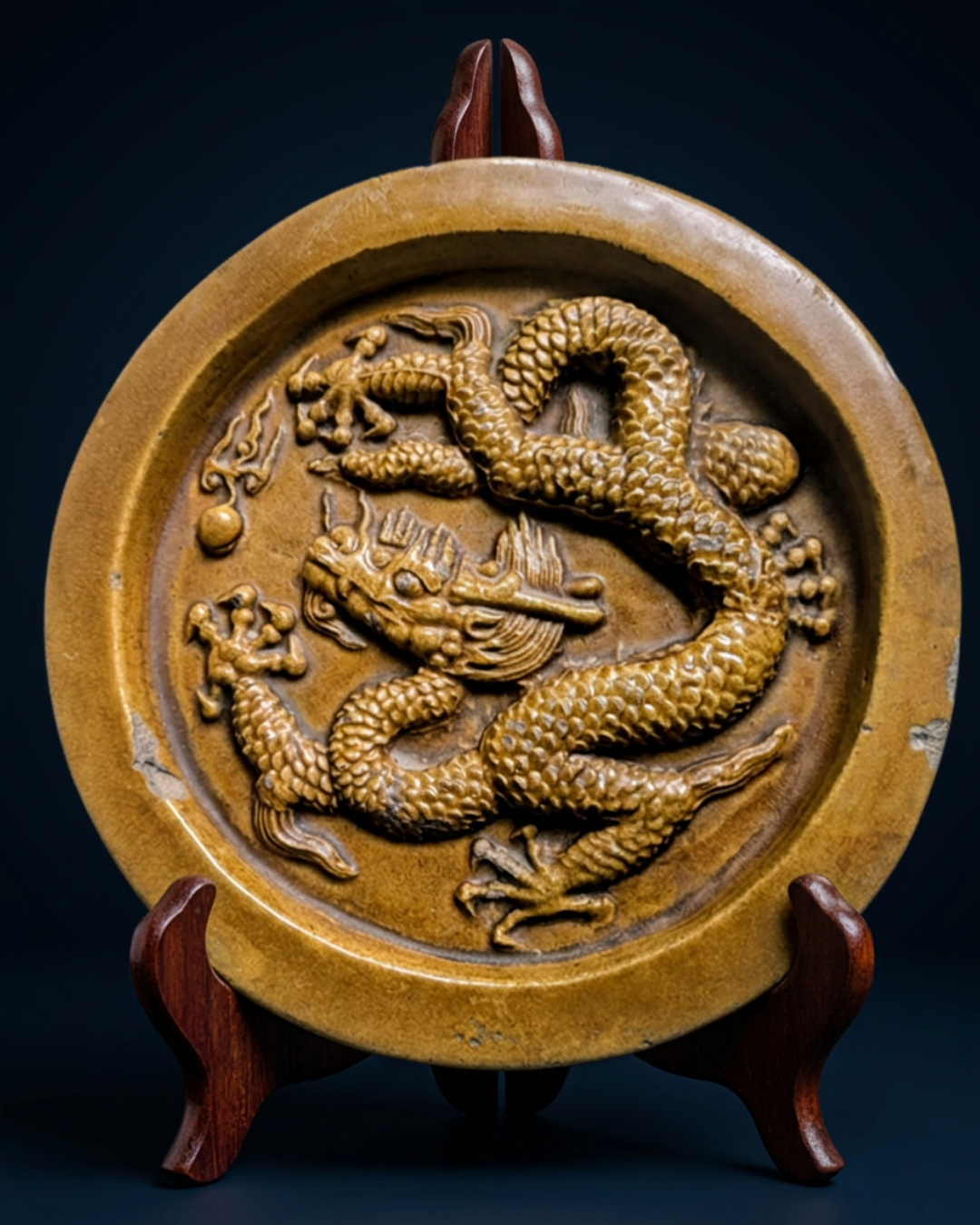
Is the historic Opium Trade & ‘Traitors’ Castle responsible for rare Chinese treasure in Scottish Highlands?
24.5.26
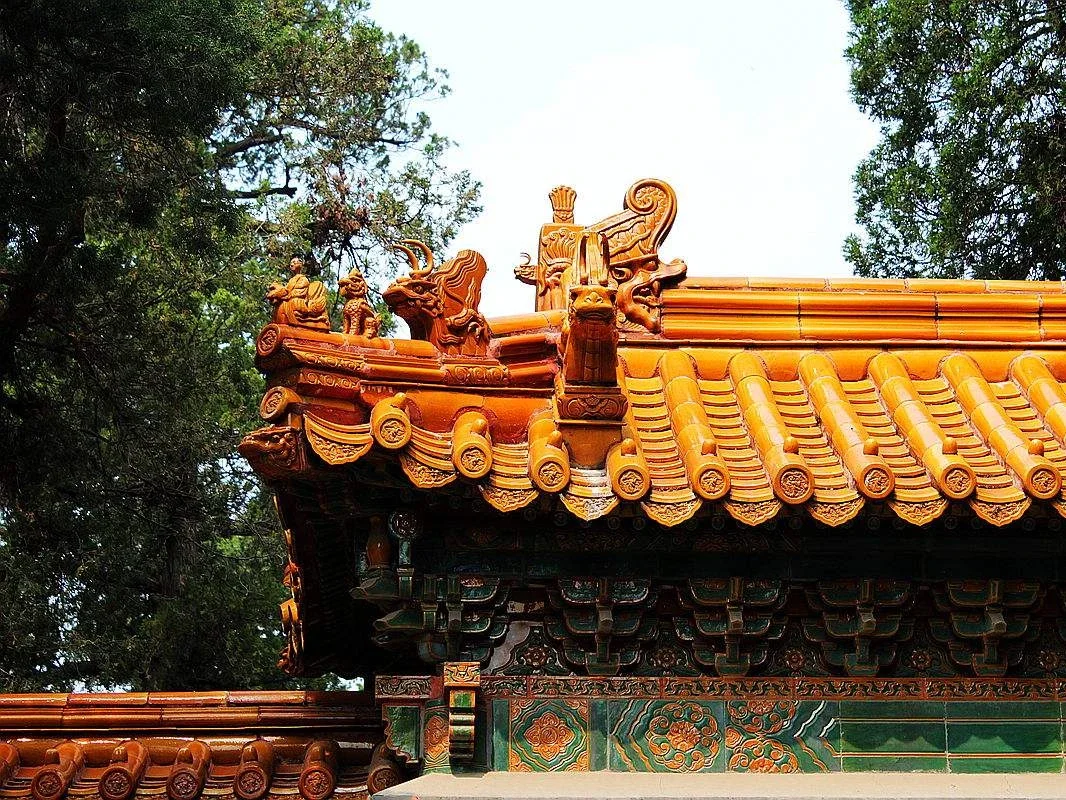
A Rare Imperial Yellow Ming Pottery Goutou Tile Terminal from the late 14th Century has just been acquired by The Cheeky Highlander in the Scottish Highlands. How did it end up there?
These eave-end tiles were crafted for the Imperial Palaces of the early Ming Dynasty in China. During the 19th-Century there was much plunder & trade during periods of upheaval, such as the Second Opium War, resulting in many pieces being removed from palace ruins or tombs.
They were shipped back to the UK by military officers, diplomats, or missionaries and entered the European art and antiques market.
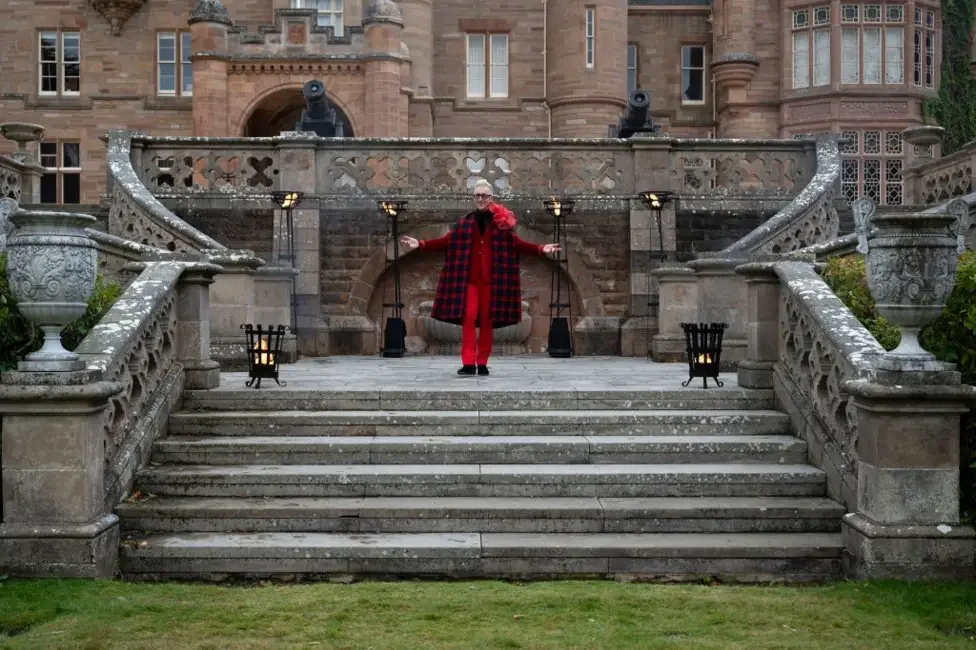
Ardross Castle is the impressive backdrop for the extremely popular TV series ‘Traitors’ and Glenmorangie adverts featuring Harrison Ford. It exists in its current state because of Sir Alexander Matheson.
Matheson was co-founder of the global trading firm Jardine Matheson and amassed a vast fortune financing the illegal flow of opium from India into China, which he used to purchase the 60,000-acre Ardross estate in 1845 and fund its lavish redesign.
His firm Jardine Matheson was heavily involved in the Opium War and they weren’t shy of flaunting the source of their wealth. The dogs on Ardross Castle Gates are seen holding an item that some believe represents a Poppy, others suggest a pomegranate.
Perhaps this 620 year old Imperial Chinese Ancient Artefact found its way into the Scottish Highlands via that opium trade…
Either way, Cheeky @ Scottish Highland Antiques is delighted that the Scottish Highlands keeps unearthing global treasures time and time again.