

 Image 1 of 4
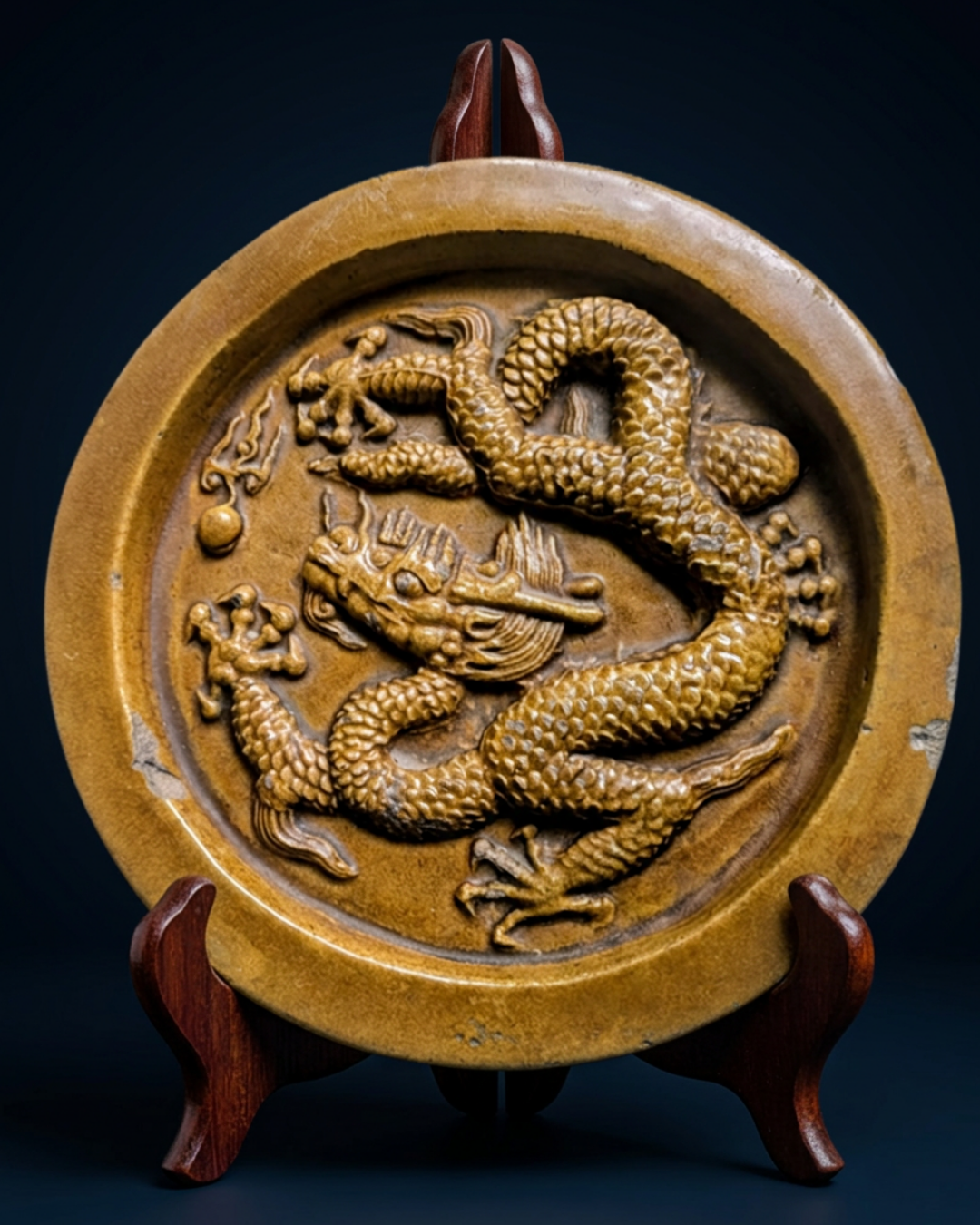 Image 2 of 4
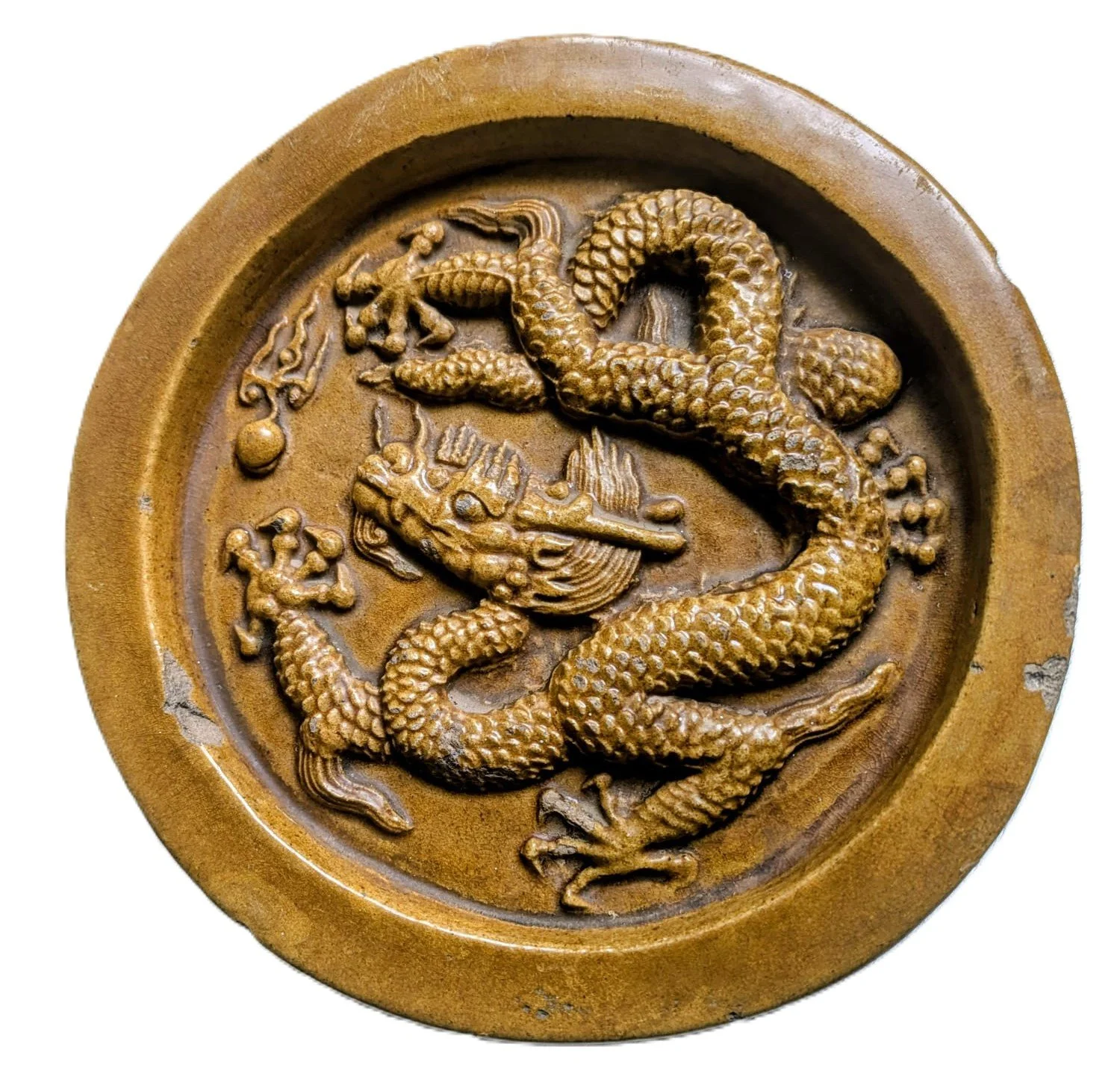 Image 3 of 4
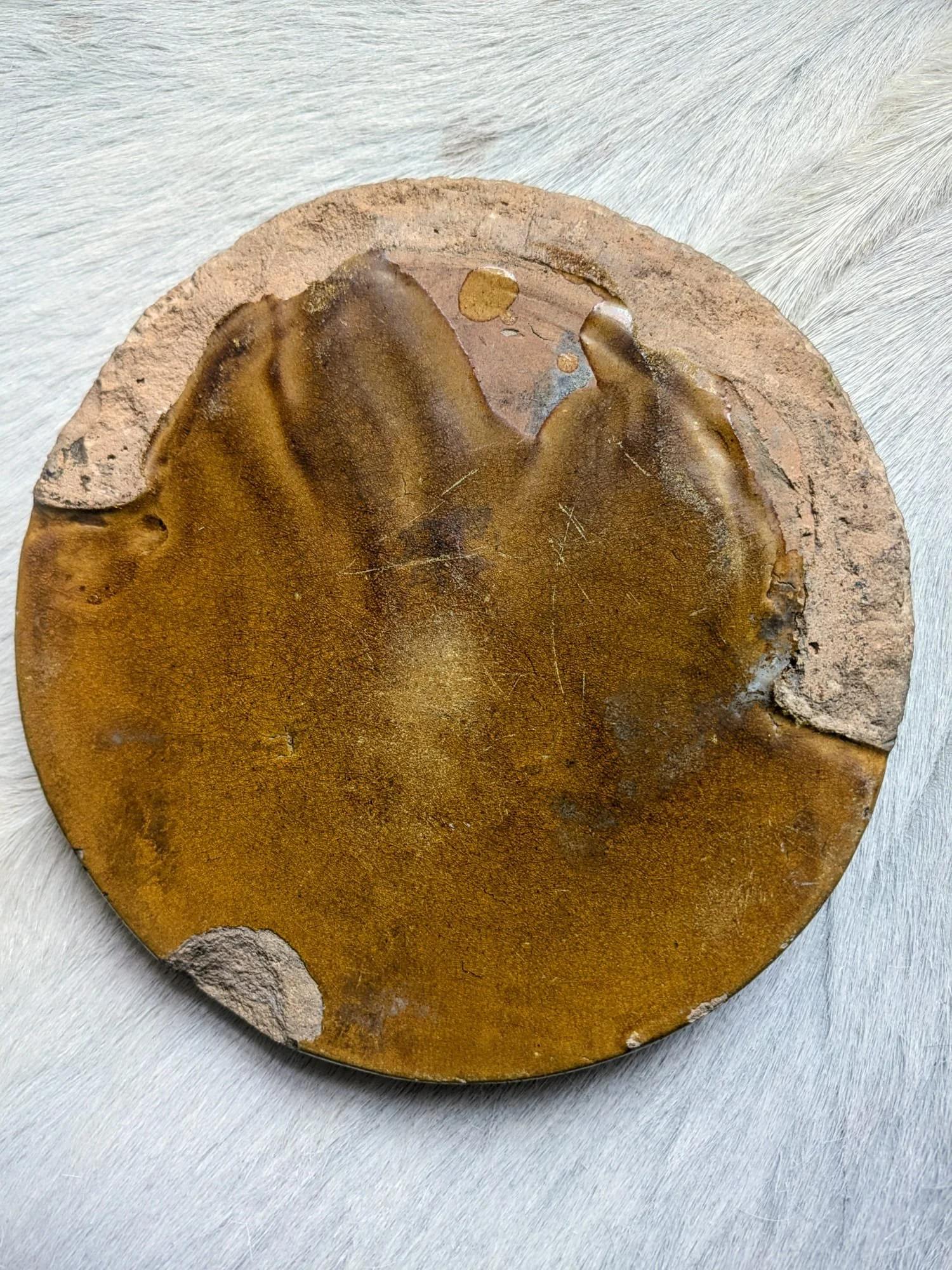 Image 4 of 4
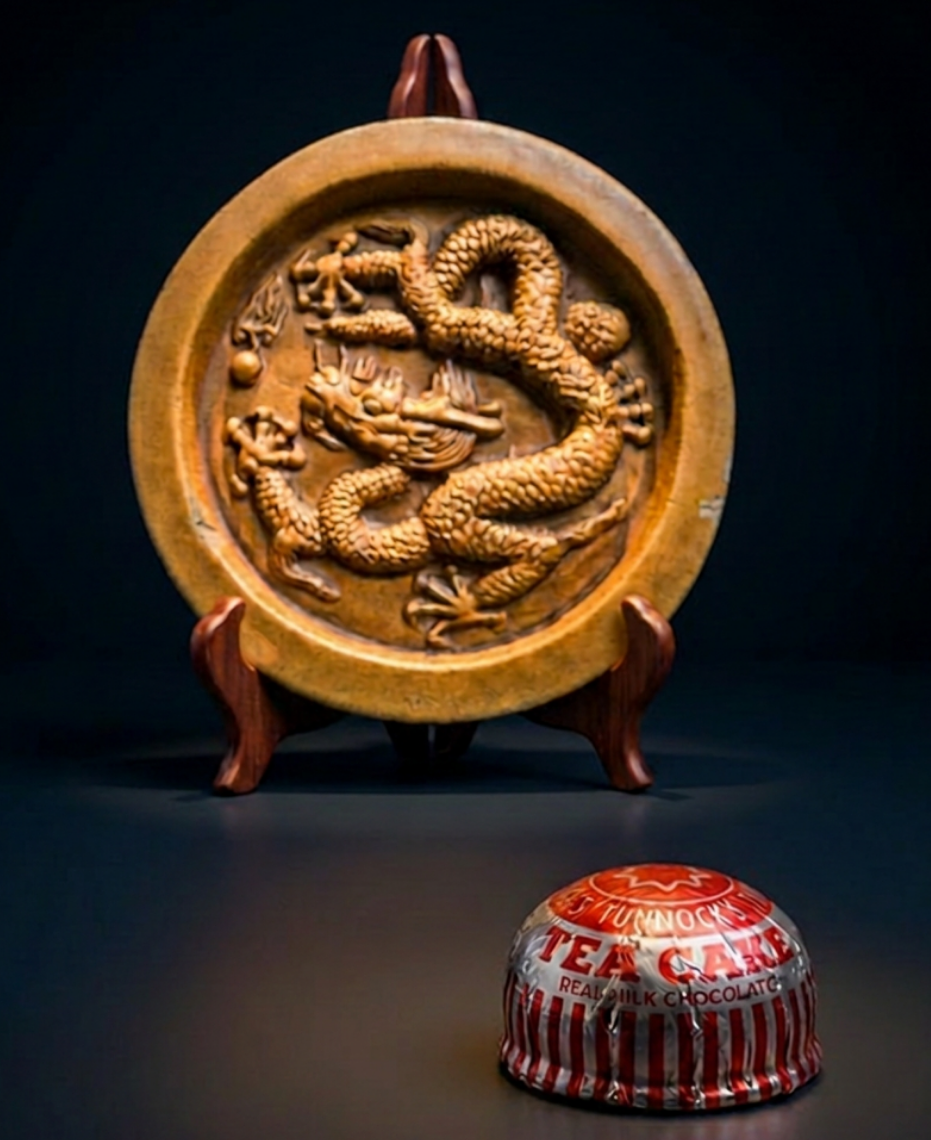
A Rare Imperial Yellow Ming Pottery Goutou Tile Terminal, Late 14th or Early 15th Century. (600+ years old)
The circular roundel is moulded with an Imperial ‘Five Claw Dragon chasing a flaming pearl of wisdom.’
This is an imperial Chinese roof-tile end (known as a wadang or goutou) from the Ming dynasty (1368–1644). These circular caps were used to seal the ends of semi-cylindrical roof tiles, serving both a functional and highly decorative purpose on high-status buildings.
The Metropolitan Museum of Art
Key Features
Imperial Symbolism: The relief shows a five-clawed dragon—a motif strictly reserved for the Emperor and the imperial family—chasing a flaming pearl.
Material: It is made of yellow-glazed earthenware (pottery). The "imperial yellow" color (called liuli wa) was primarily permitted for royal residences and temples.
Historical Context: Similar tiles have been found in the Forbidden City in Beijing and the Ming palace in Nanjing.
Function: In traditional architecture, these tiles helped secure the roof structure and protected the wooden eaves from water damage.
A Rare Imperial Yellow Ming Pottery Goutou Tile Terminal, Late 14th or Early 15th Century. (600+ years old)
The circular roundel is moulded with an Imperial ‘Five Claw Dragon chasing a flaming pearl of wisdom.’
This is an imperial Chinese roof-tile end (known as a wadang or goutou) from the Ming dynasty (1368–1644). These circular caps were used to seal the ends of semi-cylindrical roof tiles, serving both a functional and highly decorative purpose on high-status buildings.
The Metropolitan Museum of Art
Key Features
Imperial Symbolism: The relief shows a five-clawed dragon—a motif strictly reserved for the Emperor and the imperial family—chasing a flaming pearl.
Material: It is made of yellow-glazed earthenware (pottery). The "imperial yellow" color (called liuli wa) was primarily permitted for royal residences and temples.
Historical Context: Similar tiles have been found in the Forbidden City in Beijing and the Ming palace in Nanjing.
Function: In traditional architecture, these tiles helped secure the roof structure and protected the wooden eaves from water damage.