

 Image 1 of 2
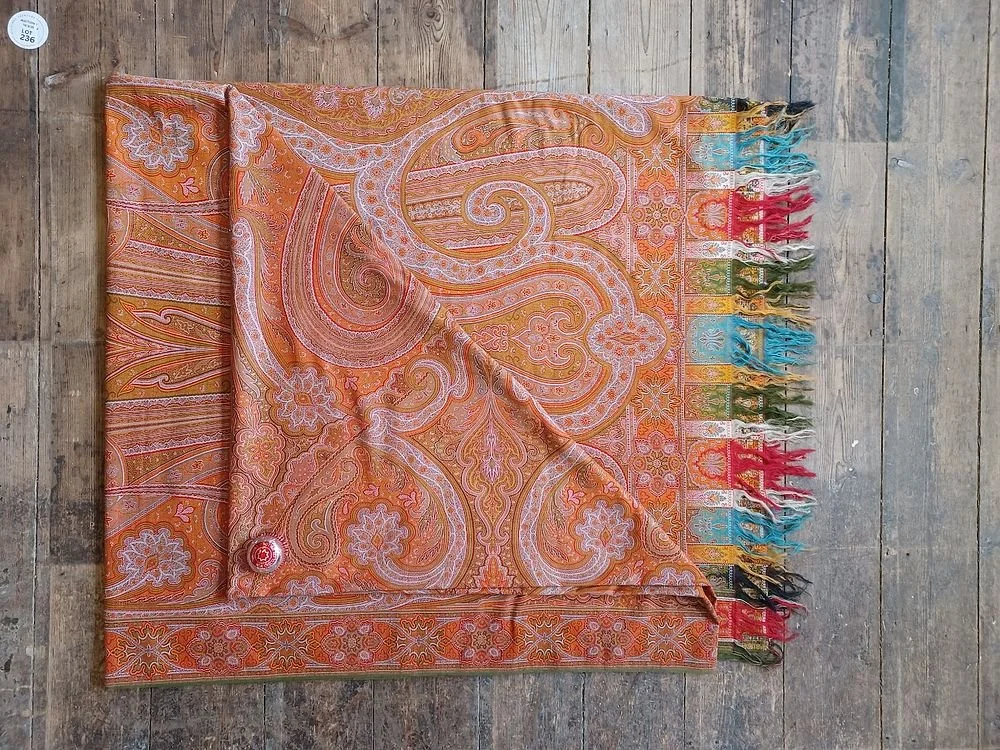 Image 2 of 2
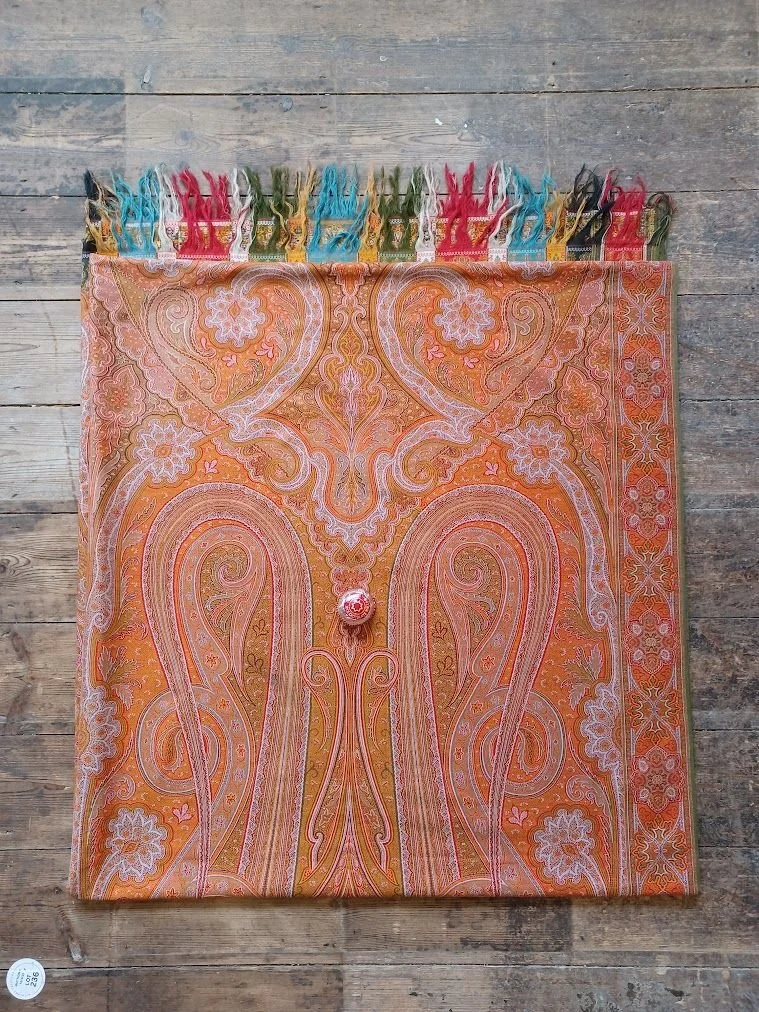
A large and eye-catching Victorian wool Paisley shawl. Designed in eye-catching colours.
Circa 1850, Scotland.
The earliest shawls were made in Kashmir and woven specifically from the hairs of mountain goats, called pashm or pashmina. This goats’ hair was soft and fine and produced excellent cashmere. Shawls were worn as accessories by both men and women, and were often given as gifts or dowries. As part of the Silk Route the East India Company imported paisley shawls from Kashmir and Persia to Europe in large quantities, and they became very popular in France and England.
But by 1804 Joseph Marie Jacquard had developed the first programmable loom, known as the Jacquard loom, and this, along with other new technologies dramatically increased the speed at which textiles could be woven. In 1805 production began to expand in the small town of Paisley in Renfrewshire, Scotland (and also to a lesser extent in Wales), where shawls were made from wool blended with silk. Initially the British shawls were only produced in two colours – indigo and madder. By the height of production (1850 – 1860), Paisley had 6,000 weavers.
Throughout this period Kashmiri shawls were also in demand, despite their higher prices. This is because they were made of cashmere, which was more luxurious, softer and warmer than wool, also the Kashmiri looms produced fully reversible fabrics with many more colours. However by the mid 1800s there was approximately the same number of shawls being imported from Kashmir as were being produced in Britain.
Condition ~
Good antique condition, no holes or repairs. Some losses to the fringe.
Excluding fringe – L 332 | W 157 cm
A large and eye-catching Victorian wool Paisley shawl. Designed in eye-catching colours.
Circa 1850, Scotland.
The earliest shawls were made in Kashmir and woven specifically from the hairs of mountain goats, called pashm or pashmina. This goats’ hair was soft and fine and produced excellent cashmere. Shawls were worn as accessories by both men and women, and were often given as gifts or dowries. As part of the Silk Route the East India Company imported paisley shawls from Kashmir and Persia to Europe in large quantities, and they became very popular in France and England.
But by 1804 Joseph Marie Jacquard had developed the first programmable loom, known as the Jacquard loom, and this, along with other new technologies dramatically increased the speed at which textiles could be woven. In 1805 production began to expand in the small town of Paisley in Renfrewshire, Scotland (and also to a lesser extent in Wales), where shawls were made from wool blended with silk. Initially the British shawls were only produced in two colours – indigo and madder. By the height of production (1850 – 1860), Paisley had 6,000 weavers.
Throughout this period Kashmiri shawls were also in demand, despite their higher prices. This is because they were made of cashmere, which was more luxurious, softer and warmer than wool, also the Kashmiri looms produced fully reversible fabrics with many more colours. However by the mid 1800s there was approximately the same number of shawls being imported from Kashmir as were being produced in Britain.
Condition ~
Good antique condition, no holes or repairs. Some losses to the fringe.
Excluding fringe – L 332 | W 157 cm